
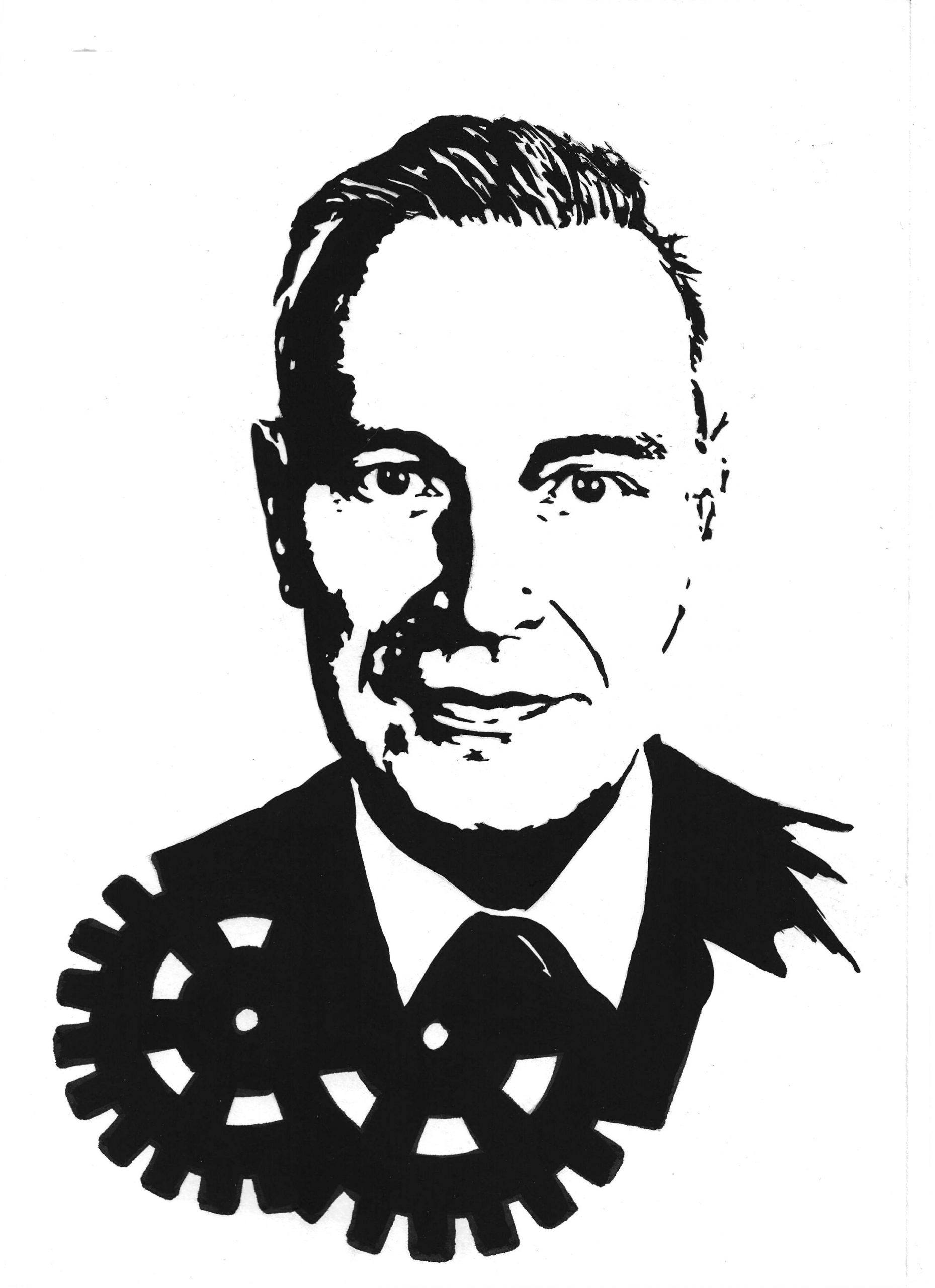
A creat primul calculator din țările socialiste, CIFA-1, cu excepția URSS. La același institut a construit CIFA 2, CIFA 3, CIFA 4 și CET 500, iar la Academia Bulgară de Științe în 1964 calculatorul VITOSHA, similar cu CIFA 3.
e face remarcat încă de la începutul prestigioasei sale cariere ştiinţifice printr-o serie de realizări de excepţie în domeniul echipamenelor numerice de măsurare a radioactivităţii şi măsurători de timp, lucrări certificate prin brevete de invenţie şi răsplătite cu Premiul de Stat (1950) şi Premiul Academiei Române. În 1956 savantul francez André Langevin, într-un articol din presa timpului scris după o vizită în laboratorul de maşini de calcul al I.F.A. – ocazie cu care l-a cunoscut pe inginerul Victor Toma, şeful unui mic colectiv care se ocupa de construcţia primelor calculatoare electronice din ţară – relata: „Am remarcat îndeosebi un tânăr cercetător format la Institutul Politehnic Bucureşti, care după o muncă perseverentă de informare şi de concepţie a reuşit să obţină rezultate remarcabile în tehnica atât de specială a maşinilor de calculat. Cu experienţa acumulată, cu o răbdare şi un entuziasm demne de admirat, el a realizat etapă cu etapă o foarte modernă maşina de calculat. Ea este, de altfel, prima maşină de acest fel realizată în ţările de democraţie populară şi, se înţelege, va aduce deosebite foloase Institutului de Fizică şi celorlalte institute de cercetări din România.” În 1962, Profesorul Grigore Moisil vorbea şi el în cuvinte emoţionante despre Victor Toma: „Este meritul incontestabil al conducerii Institutului de Fizică Atomică de a fi înţeles importanţa construcţiei de calculatoare electronice şi de a fi sprijinit această problemă”. Este un semn de deosebită apreciere şi recunoastere a meritelor incontestabile ale celui care a fost marele Profesor Horia Hulubei, directorul IFA, cel ce cu dragoste încuraja căutările de început spunând: „Lasaţi-l pe Toma să se ocupe de tinichelele lui….”. Datorită Academicianului Victor Toma şi sub directa sa îndrumare au fost realizate o serie de calculatoare electronice pe tuburi începând cu CIFA-1 (aprilie 1957), CIFA-2 (1959), CIFA-3 (1960), CIFA-4 (1962) şi apoi pe tranzistori CET-500 (1964) şi CET-501 (1966). În secţia condusă de Victor Toma au fost realizate şi calculatoarele CIFA-101 (1962) şi CIFA-102 (1963). Reputaţia lui Victor Toma a depăşit graniţele ţării, fiind cel ce a condus la realizarea calculatorului Vitosha (1963), primul calculator electronic realizat în Bulgaria, o replică a calculatorului CIFA-3. În semn de recunoştinţă, Academia Bulgară înscrie numele său în istoria tehnicii de calcul din această ţară. Din anul 1968, odată cu înfiinţarea ITC (Institutul de Tehnică de Calcul), Victor Toma îşi desfăşoară activitatea în acest institut, conducând o serie de proiecte materializate prin numeroase patente şi publicaţii. Prin Academicianul Victor Toma s-a scris una din paginile de aur ale istoriei Institutului de Fizică Atomică şi ale tehnicii româneşti, istorie care consemnează priorităţi în domeniul construcţiei de calculatoare, dezvoltarea IT şi a comunicaţiilor, precum şi crearea unei şcoli româneşti de analiză numerică şi programare.
Victor TOMA – EN
He created the first computer in the socialist countries, “CIFA-1”, with the exception of the USSR (Union of Soviet Socialist Republics). At the same institute he built “CIFA-2”, “CIFA-3”, “CIFA-4” and “CET-500”, and at the Bulgarian Academy of Sciences, in 1964, the computer “VITOSHA”, similar to “CIFA-3”.
He distinguished himself from the very beginning of his prestigious scientific career through a series of exceptional achievements in the field of digital equipment for measuring radioactivity and time measurements, works certified by patents of invention and rewarded with the State Prize (1950) and the Prize of the Romanian Academy.
In 1956, the French scientist André Langevin, in an article from the press of the time written after a visit to the computing machines laboratory of the I.F.A. – an occasion on which he met engineer Victor Toma, the head of a small team dealing with the construction of the first electronic computers in the country – reported: „I particularly noticed a young researcher trained at the Politehnica Institute of Bucharest, who, after a persevering work of information and conception, managed to obtain remarkable results in the so special technique of calculating machines. With the accumulated experience, with a patience and enthusiasm worthy of admiration, he realized step by step a very modern calculating machine. It is, moreover, the first machine of this kind built in the countries of popular democracy and, understandably, it will bring particular benefits to the Institute of Physics and to the other research institutes in Romania.”
In 1962, Professor Grigore Moisil also spoke in touching words about Victor Toma: „It is the incontestable merit of the leadership of the Institute of Atomic Physics to have understood the importance of electronic computer construction and to have supported this issue”. It is a sign of special appreciation and recognition of the incontestable merits of the one who was the great Professor Horia Hulubei, the director of IFA, who with love encouraged the early quests, saying: „Leave Toma to deal with his tin pieces…”.
Thanks to Academician Victor Toma and under his direct guidance, a series of tube-based electronic computers were built, starting with CIFA-1 (April 1957), CIFA-2 (1959), CIFA-3 (1960), CIFA-4 (1962), and then the transistor-based CET-500 (1964) and CET-501 (1966). The department led by Victor Toma also built the CIFA-101 (1962) and CIFA-102 (1963) computers.
Victor Toma’s reputation crossed the country’s borders, as he was the one who led the creation of the Vitosha computer (1963), the first electronic computer built in Bulgaria, a replica of the CIFA-3 computer. As a sign of gratitude, the Bulgarian Academy inscribes his name into the history of computing technology in that country.
From the year 1968, with the establishment of the ITC (Institute for Computer Technology), Victor Toma carried out his activity within this institute, leading a series of projects materialized through numerous patents and publications.
Through Academician Victor Toma, one of the golden pages of the history of the Institute of Atomic Physics and of Romanian technology was written—a history that records priorities in the field of computer construction, the development of IT and communications, as well as the creation of a Romanian school of numerical analysis and programming.
Виктор ТОМА – RU
Он создал первый компьютер в социалистических странах – «CIFA-1», за исключением СССР (Союза Советских Социалистических Республик). В том же институте он построил «CIFA-2», «CIFA-3», «CIFA-4» и «CET-500», а в Болгарской академии наук в 1964 году – компьютер «VITOSHA», аналогичный «CIFA-3».
Он выделился уже в самом начале своей престижной научной карьеры благодаря ряду выдающихся достижений в области цифрового оборудования для измерения радиоактивности и измерения времени — работ, подтвержденных патентами на изобретения и отмеченных Государственной премией (1950) и Премией Румынской академии.
В 1956 году французский ученый Андре Ланжевен в статье в прессе того времени, написанной после посещения лаборатории вычислительных машин И.Ф.А. (I.F.A.) — случая, когда он познакомился с инженером Виктором Тома, руководителем небольшого коллектива, занимавшегося созданием первых электронных вычислительных машин в стране, — сообщал: «Я особенно заметил молодого исследователя, получившего образование в Бухарестском политехническом институте, который после упорной информационной и концептуальной работы сумел добиться замечательных результатов в столь специальной технике вычислительных машин. Благодаря накопленному опыту, терпению и энтузиазму, достойным восхищения, он шаг за шагом создал очень современную вычислительную машину. Более того, это первая машина такого рода, созданная в странах народной демократии, и, разумеется, она принесет огромную пользу Институту физики и другим научно-исследовательским институтам Румынии».
В 1962 году профессор Григоре Моисил также с волнением говорил о Викторе Тома: «Это неоспоримая заслуга руководства Института атомной физики — в том, что оно поняло важность создания электронных вычислительных машин и поддержало этот вопрос». Это знак особого уважения и признания неоспоримых заслуг того, кто был великим профессором Хорией Хулубеем, директором ИФА (IFA), который с любовью поощрял ранние поиски, говоря: «Оставьте Тома заниматься своими железками…».
Благодаря академику Виктору Тома и под его непосредственным руководством был создан ряд электронно-ламповых вычислительных машин, начиная с CIFA-1 (апрель 1957 г.), CIFA-2 (1959 г.), CIFA-3 (1960 г.), CIFA-4 (1962 г.), а затем транзисторных CET-500 (1964 г.) и CET-501 (1966 г.). В отделе под руководством Виктора Тома были также созданы компьютеры CIFA-101 (1962 г.) и CIFA-102 (1963 г.).
Репутация Виктора Тома вышла за пределы страны: именно он руководил созданием компьютера «Витоша» (Vitosha, 1963) — первой электронной вычислительной машины, созданной в Болгарии и являвшейся репликой компьютера CIFA-3. В знак благодарности Болгарская академия наук вписала его имя в историю вычислительной техники этой страны.
С 1968 года, одновременно с основанием ITC (Института вычислительной техники), Виктор Тома осуществляет свою деятельность в этом институте, руководя рядом проектов, воплотившихся в многочисленных патентах и публикациях.
Благодаря академику Виктору Тома была написана одна из золотых страниц истории Института атомной физики и румынской техники — истории, которая фиксирует приоритеты в области компьютеростроения, развития ИТ и коммуникаций, а также создания румынской школы численного анализа и программирования.