
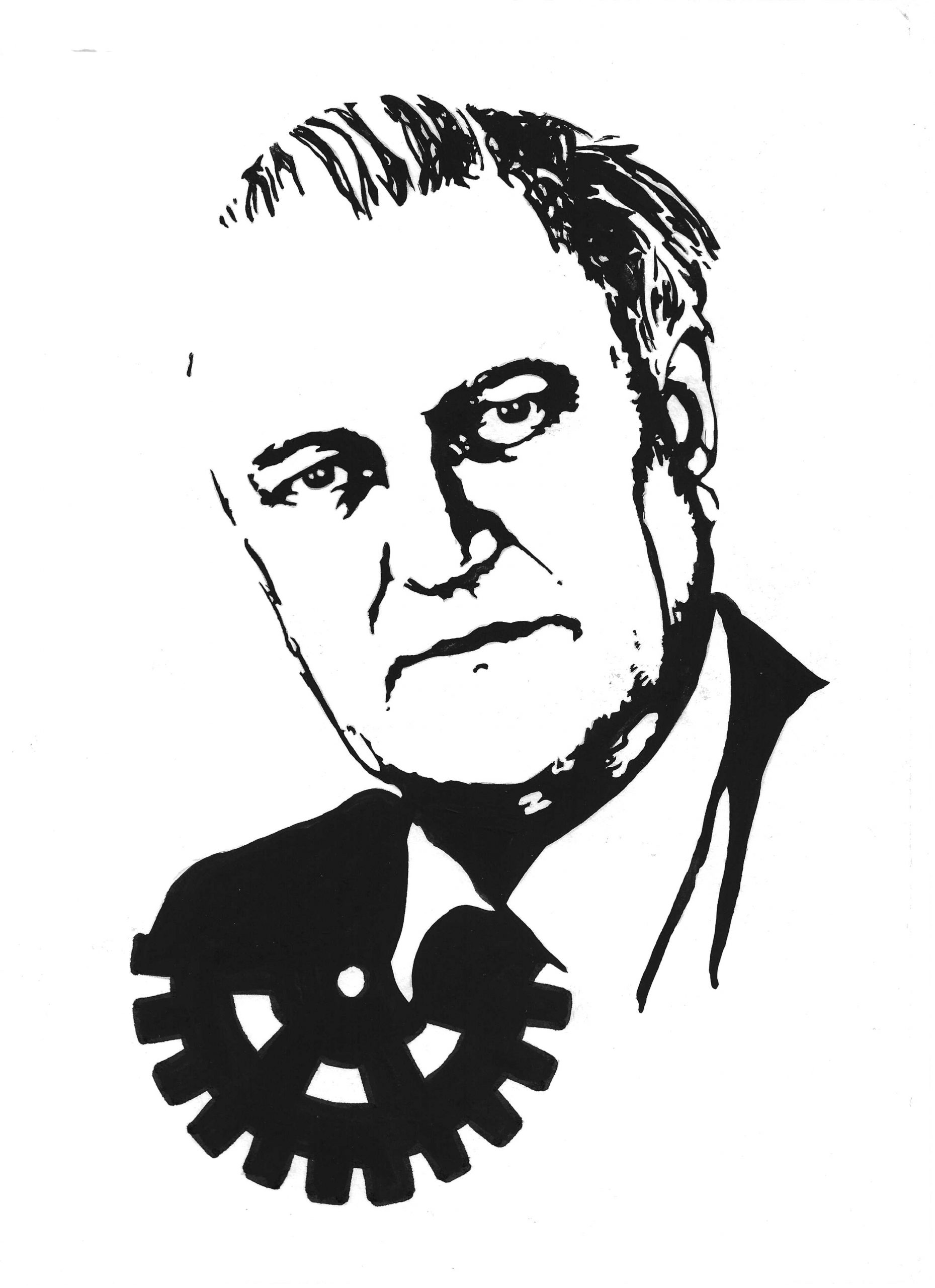
Este fondatorul primei școli lingvistice din America de Sud. Fondatorul Lingvisticii Integrale. În anii 1970, Școala din Tübingen a lui Eugeniu Coșeriu a devenit cea mai importantă în studiile romanice, cu mare impact chiar și dincolo de studiile romanice, mai ales în domeniul lingvisticii generale și al filosofiei limbajului, dar și în alte discipline, precum lingvistica germanică sau slavă.
Trecut pe la şcoli înalte (Iaşi, cu Iorgu Iordan şi Petru Caraman; Roma, Padova şi Milano), luându-şi un doctorat în litere la Roma, apoi şi în filozofie (Milano, 1949), cel care a văzut lumina zilei la Mihăileni, Bălţi într-o familie de învăţători (n. 27 iulie 1921) – Eugen Coșeriu – a fost supranumit „Lingvistul secolului XX‖, „Colosul din Germania‖, „Lingvistul nr. 1‖, „Gigantul de la Tubingen‖, „Regele lingvisticii‖ devenit „un gigant al lingvisticii‖ (Hans Helmuth Christemann), părintele lingvisticii integrale. La 31 de ani publica Sistema, norma yhabla, apoi, în 1958, Sincronie, diacronie şi istorie (tipărită în româneşte abia în 1997), predând cursuri de lingvistică generală şi de romanistică la Universităţile din Montevideo (1951-1963) şi Tübingen, prezent ca profesor invitat în multe locuri de pe glob, întemeind prestigioasa şcoală coşeriană de un larg ecou. A publicat extraordinar de mult, peste 45 le volume şi sute de articole în limbile italiană, spaniolă, franceză, germană, engleză şi a fost tradus în limbile japoneză (9 volume), chineză, arabă, greacă, bulgară, finlandeză, rusă, georgiană, coreeană, cehă ş. a. Acad. Coşeriu s-a dovedit a fi unul dintre cei mai prodigioşi autori în jumătate de secol de activitate ştiinţifică şi pedagogică, de sub pana măiastră i savantului au ieşit zeci de volume şi circa 500 de articole editate în cele mai prestigioase centre universitare de pe Terra. E un caz fenomenal, unic în felul său, în istoria lingvisticii mondiale sunt puţini autori similari. Este doctor honoris causa 40 de Universităţi ale lumii, printre care: Bucureşti (1971), Montevideo (1980), Tampere – Finlanda (1985), Cordoba – Argentina (1987), Universitatea catolică in Chile – Santiago (1988), Munster (1989), Madrid (1989), Bologna (1990), Grenada (1991), Iaşi (1991), Chişinău (1993), Suceava, Târgovişte, Cluj-Napoca, Craiova etc. E. Coşeriu este şi profesor honoris causa al Universităţii din San Juan (Argentina) din anul 1981. Este membru de onoare al mai multor academii, inclusiv al Academiei de Ştiinţe din Republica Moldova (1991). După opinia unor lingviști de notorietate, lingviştii contemporani ar putea fi împărţiţi în trei grupe: a) „teoreticieni prin excelenţă‖; b) „empirici prin excelenţă‖, care se limitează la descrierea amănunţită a faptelor de limbă, nefiind în stare sau nedorind să teoretizeze materialul; c) lingvişti care ştiu a îmbina cu succes teoria şi faptologia, demonstrând esenţa limbii ca fenomen social.
Profesorul Eugeniu Coşeriu ţine de grupul treilea de lingvişti, pentru că orice studiu al ‖regelui lingvisticii‖ emană prospeţime, gânduri, sugestii şi concluzii, ce denotă nu numai o excepţională pregătire teoretică, o doctrină lingvo-filozofică unitară şi originală, ci şi o excepţională cunoaştere a faptelor din diverse limbi1 . Prin utilitatea, profunzimea şi noutatea doctrinelor lansate, prin forţa de pătrundere în structurile multor limbi cercetate, prin capacitatea de analiză şi si teză a faptelor şi fenomenelor din nenumăratele graiuri omeneşti, prin viziunea ansamblu şi originalitatea metodologiei propuse, prof. E. Coşeriu îşi ocupă locul meritat alături de celebrii lingvişti ai lumii ca, de exemplu: germanii Wilhelm von Humboldt, Hugo Schuchardt, Wilhelm Meyer-Lubke; francezii Antoine Meillet, Joseph Vendryes, Andre Martinet, Bemard Pottier; americanii Leonard Bloomfield, Eugene Nida, Noam Chomsky; italienii Bruno Migliorini, Benvenuto A. Terracini, Carlo Tagliavini; danezii Louis Hjelmslev, Otto Jespersen, Knud Togeby; românii Sextil Puşcariu, Iorgu Iordan, Alexandru Rosetti etc. E. Coşeriu este un lingvist teoretician prin excelenţă, un consecvent adept al structuralismului şi funcţionalismului, dar în acelaşi timp şi un adversar deschis al formalismului extremist şi al idealismului platonian în ştiinţa limbii. Aria preocupărilor filologice ale prof. E. Coşeriu este foarte întinsă. Acceptate prin tradiție, putem vorbi de 3 direcţii: lingvistica generală, lingvistica romanică şi istoria lingvisticii (personalia). În numeroasele sale lucrări de orientare generală teoretică autorul a abordat probleme cum ar fi: sistem – normă – vorbire: sincronie – diacronie – tipologie; logismul şi antilogismul în gramatică; omul şi limbajul său; critica glotocronologiei; rolul factorului intuitiv în lingvistică; despre dezvoltare în domeniul lingvisticii; semantica diacronică structurală; tipologia câmpurilor lexicale; semnificatul şi semnificantul în lumina semanticii structurale; caracterul arbitrar al semnului lingvistic; problema părţilor de vorbire; logica limbajului şi logica gramaticii; posibilităţile şi limitele gramaticii contrastive; semantica şi gramatica; problema universaliilor în limbă; studiul funcţional al vocabularului; principii ale sintaxei structurale etc. În toată lingvistica pe care a reprezentat-o marele savant, motivul său a fost vorbitorul, adică convingerea după care lingvistul trebuie să se preocupe de tot ceea ce îl interesează pe vorbitor. Vorbitorul este măsura tuturor lucrurilor în lingvistică, fiindcă limbajul e făcut de către şi pentru vorbitori, nu de către şi pentru lingvişti, şi, deci, lingvistul trebuie să explice care este fundamentul acestei nelinişti a vorbitorului care vrea să vorbească corect şi care se întreabă dacă e bine sau nu e bine spus ceea ce spune, dacă modul lui de a vorbi este un mod corect, dacă există alte moduri, superioare, de a vorbi în aceeaşi limbă. Fără îndoială, vorbitorul nu este lingvist şi, deci, când interpretează el însuşi această atitudine şi această nelinişte, poate greşi. Datoria lingvistului este să justifice, să explice fundamentul şi sensul propriu al acestei nelinişti şi al dorinţei vorbitorului de a vorbi mai bine, de a vorbi corect, de a vorbi o limbă, într-un fel, superioară. E drept că limbajul ca formă fundamentală a culturii, adică a spiritului obiectivat în istorie, este o activitate liberă şi e o manifestare a libertăţii creatoare a omului liber, în sensul filozofic al acestui cuvânt, adică o activitate al cărei obiect este infinit, care creează, îşi creează acest obiect. Deci, limbajul este, prin natura sa, dinamic, deschis, liber şi creator. însă libertatea omului istoric nu este nici arbitrariu, nici capriciu, libertatea omului istoric este o libertate ordonată prin propriile sale norme2 . De aceea, liberalismul lingvistic excesiv nu este în realitate liberalism, ci este mai curînd libertinaj, fiindcă nu recunoaşte existenţa acestor norme care interesează pe toţi vorbitorii. Acest liberalism nu promovează, în realitate, libertatea limbajului, care este întotdeauna o libertate motivată, ci, dimpotrivă, arbitrariul nu e în realitate o atitudine progresistă, tolerantă şi democratică, ci, dimpotrivă, e o atitudine reacţionară şi antidemocratică.
(www.ibn.idsi.md)
Eugeniu COȘERIU – EN
He is the founder of the first linguistic school in South America. Founder of Integral Linguistics. In the 1970s, the Tübingen School of Eugeniu Coșeriu became the most important school in Romance studies, having a major impact even beyond this field, especially in general linguistics and the philosophy of language, but also in other disciplines such as Germanic linguistics and Slavic linguistics.
Educated at high academic institutions (Iași, with Iorgu Iordan and Petru Caraman; Rome, Padua, and Milan), earning a doctorate in letters in Rome, and later in philosophy (Milan, 1949), the man who saw the light of day in Mihăileni, Bălți in a family of teachers (born July 27, 1921) — Eugen Coșeriu — was surnamed „The Linguist of the 20th Century,” „The Colossus of Germany,” „Linguist No. 1,” „The Giant of Tübingen,” and „The King of Linguistics,” becoming „a giant of linguistics” (Hans Helmuth Christemann), the father of integral linguistics.
At 31 years old, he published Sistema, norma y habla, and then, in 1958, Sincronie, diacronie şi istorie (printed in Romanian only in 1997). He taught courses in general linguistics and Romance studies at the Universities of Montevideo (1951-1963) and Tübingen, served as a visiting professor in many places around the globe, and founded the prestigious Coșerian school which had a wide resonance.
He published an extraordinary amount—over 45 volumes and hundreds of articles in Italian, Spanish, French, German, and English—and was translated into Japanese (9 volumes), Chinese, Arabic, Greek, Bulgarian, Finnish, Russian, Georgian, Korean, Czech, and others. Acad. Coșeriu proved to be one of the most prodigious authors over half a century of scientific and pedagogical activity; from the scholar’s masterly pen came dozens of volumes and around 500 articles published in the most prestigious university centers on Earth. It is a phenomenal case, unique in its kind; there are few similar authors in the history of world linguistics.
He holds doctor honoris causa degrees from 40 universities worldwide, including: Bucharest (1971), Montevideo (1980), Tampere – Finland (1985), Cordoba – Argentina (1987), Catholic University of Chile – Santiago (1988), Münster (1989), Madrid (1989), Bologna (1990), Granada (1991), Iași (1991), Chișinău (1993), Suceava, Târgoviște, Cluj-Napoca, Craiova, etc. E. Coșeriu has also been an honorary professor (profesor honoris causa) of the University of San Juan (Argentina) since 1981. He is an honorary member of several academies, including the Academy of Sciences of the Republic of Moldova (1991).
Linguistic Philosophy and Methodology
According to the opinions of notable linguists, contemporary scholars in the field could be divided into three groups:
- „Theoreticians par excellence”
- „Empiricists par excellence,” who limit themselves to the detailed description of language facts, being unable or unwilling to theorize the material
- Linguists who successfully combine theory and factology, demonstrating the essence of language as a social phenomenon.
Professor Eugeniu Coșeriu belongs to the third group, because any study by the „king of linguistics” emanates freshness, thoughts, suggestions, and conclusions that denote not only an exceptional theoretical background and a unitary, original linguo-philosophical doctrine but also an exceptional knowledge of facts from various languages.
Through the usefulness, depth, and novelty of the doctrines he launched, the power of penetration into the structures of the many languages he researched, his capacity for analyzing and synthesizing facts and phenomena from countless human dialects, and the overall vision and originality of his proposed methodology, Prof. E. Coșeriu occupies his well-deserved place alongside the world’s famous linguists, such as:
- Germans: Wilhelm von Humboldt, Hugo Schuchardt, Wilhelm Meyer-Lübke
- French: Antoine Meillet, Joseph Vendryes, André Martinet, Bernard Pottier
- Americans: Leonard Bloomfield, Eugene Nida, Noam Chomsky
- Italians: Bruno Migliorini, Benvenuto A. Terracini, Carlo Tagliavini
- Danes: Louis Hjelmslev, Otto Jespersen, Knud Togeby
- Romanians: Sextil Pușcariu, Iorgu Iordan, Alexandru Rosetti, etc.
- Coșeriu is a theoretical linguist par excellence, a consistent adherent of structuralism and functionalism, but at the same time an open adversary of extremist formalism and Platonic idealism in the science of language. The scope of Prof. E. Coșeriu’s philological preoccupations is remarkably broad. Accepted by tradition, we can speak of three directions: general linguistics, Romance linguistics, and the history of linguistics (personalia).
In his numerous works of general theoretical orientation, the author addressed issues such as: system – norm – speech; synchrony – diachrony – typology; logism and antilogism in grammar; man and his language; the critique of glottochronology; the role of the intuitive factor in linguistics; development in the field of linguistics; structural diachronic semantics; the typology of lexical fields; the signified and the signifier in light of structural semantics; the arbitrary character of the linguistic sign; the problem of parts of speech; the logic of language and the logic of grammar; the possibilities and limits of contrastive grammar; semantics and grammar; the problem of universals in language; the functional study of vocabulary; principles of structural syntax, etc.
The Speaker-Centric Approach
In all the linguistics represented by the great scholar, his primary motive was the speaker—meaning the conviction that the linguist must be concerned with everything that interests the speaker. The speaker is the measure of all things in linguistics, because language is made by and for speakers, not by and for linguists. Therefore, the linguist must explain the foundation of this anxiety of the speaker who wants to speak correctly and who wonders if what they say is said well or not, if their way of speaking is correct, or if there are other, superior ways to speak in the same language.
Undoubtedly, the speaker is not a linguist, and therefore, when interpreting this attitude and this anxiety themselves, they may make mistakes. The linguist’s duty is to justify and explain the foundation and proper meaning of this anxiety and the speaker’s desire to speak better, to speak correctly, to speak a language that is, in a way, superior.
It is true that language as a fundamental form of culture—meaning the spirit objectified in history—is a free activity and a manifestation of the creative freedom of the free man (in the philosophical sense of the word), meaning an activity whose object is infinite, which creates and recreates its own object. Therefore, language is, by its nature, dynamic, open, free, and creative. However, the freedom of historical man is neither arbitrary nor a caprice; it is a freedom ordered by its own norms.
That is why excessive linguistic liberalism is not, in reality, liberalism, but rather libertinism, because it fails to recognize the existence of these norms that interest all speakers. This liberalism does not actually promote the freedom of language, which is always a motivated freedom. On the contrary, arbitrariness is not a progressive, tolerant, and democratic attitude, but rather a reactionary and antidemocratic one.
(www.ibn.idsi.md)
Эуджен КОШЕРИУ – RU
Он является основателем первой лингвистической школы в Южной Америке. Основатель интегральной лингвистики. В 1970-е годы Тюбингенская школа Эудженио Кошериу стала наиболее важной школой в романских исследованиях, оказывая значительное влияние даже за пределами этой области, особенно в сфере общего языкознания и философии языка, а также в других дисциплинах, таких как германское и славянское языкознание.
Вот перевод предоставленного текста на русский язык, структурированный для удобства чтения:
Биографический и академический профиль
Пройдя обучение в высших учебных заведениях (Яссы, у Йоргу Йордана и Петру Карамана; Рим, Падуя и Милан), получив докторскую степень по литературе в Риме, а затем и по философии (Милан, 1949), человек, появившийся на свет в селе Михайляны Бельцкого уезда в семье учителей (род. 27 июля 1921 г.) — Эужениу (Эуген) Косериу — был прозван «Лингвистом XX века», «Колоссом из Германии», «Лингвистом № 1», «Гигантом из Тюбингена», «Королем лингвистики», ставшим «гигантом языкознания» (Ганс Хельмут Кристманн), отцом интегральной лингвистики.
В возрасте 31 года он опубликовал работу Sistema, norma y habla («Система, норма и речь»), затем, в 1958 году, — Sincronie, diacronie şi istorie («Синхрония, диахрония и история», изданную на румынском языке лишь в 1997 году). Он преподавал курсы общей лингвистики и романистики в университетах Монтевидео (1951–1963) и Тюбингена, выступал в качестве приглашенного профессора во многих уголках мира и основал престижную косерианскую школу, получившую широкий резонанс.
Он публиковался невероятно много: более 45 томов и сотни статей на итальянском, испанском, французском, немецком, английском языках, которые были переведены на японский (9 томов), китайский, арабский, греческий, болгарский, финский, русский, грузинский, корейский, чешский и другие языки. Академик Косериу проявил себя как один из самых продуктивных авторов за полвека научной и педагогической деятельности; из-под мастерского пера ученого вышли десятки томов и около 500 статей, изданных в самых престижных университетских центрах Земли. Это феноменальный случай, уникальный в своем роде — в истории мировой лингвистики мало подобных авторов.
Он является почетным доктором (doctor honoris causa) 40 университетов мира, среди которых: Бухарестский (1971), Монтевидео (1980), Тампере — Финляндия (1985), Кордова — Аргентина (1987), Католический университет Чили — Сантьяго (1988), Мюнстер (1989), Мадрид (1989), Болонья (1990), Гранада (1991), Яссы (1991), Кишинев (1993), Сучава, Тырговиште, Клуж-Напока, Крайова и др. Э. Косериу также является почетным профессором (profesor honoris causa) Университета Сан-Хуана (Аргентина) с 1981 года. Он — почетный член многих академий, в том числе Академии наук Республики Молдова (1991).
Лингвистическая философия и методология
По мнению некоторых известных языковедов, современных лингвистов можно разделить на три группы:
- «Теоретики по преимуществу»
- «Эмпирики по преимуществу», которые ограничиваются подробным описанием языковых фактов, будучи не в состоянии или не желая теоретизировать материал.
- Лингвисты, умеющие успешно сочетать теорию и фактологию, демонстрируя сущность языка как социального феномена.
Профессор Эужениу Косериу относится к третьей группе лингвистов, поскольку любое исследование «короля лингвистики» излучает свежесть, мысли, предложения и выводы, свидетельствующие не только об исключительной теоретической подготовке, единой и оригинальной лингвофилософской доктрине, но и об исключительном знании фактов различных языков.
Благодаря полезности, глубине и новизне выдвинутых доктрин, силе проникновения в структуры многих исследованных языков, способности к анализу и синтезу фактов и явлений бесчисленных человеческих говоров, глобальному видению и оригинальности предложенной методологии, профессор Э. Косериу занимает заслуженное место наряду со знаменитыми лингвистами мира, такими как:
- Немцы: Вильгельм фон Гумбольдт, Гуго Шухардт, Вильгельм Мейер-Любке
- Французы: Антуан Мейе, Жозеф Вандриес, Андре Мартине, Бернар Потье
- Американцы: Леонард Блумфилд, Юджин Найда, Ноам Хомский
- Итальянцы: Бруно Мильорини, Бенвенуто А. Террачини, Карло Тальявини
- Датчане: Луи Ельмслев, Отто Есперсен, Кнуд Тогебю
- Румыны: Секстил Пушкарю, Йоргу Йордан, Александру Росетти и др.
Э. Косериу — лингвист-теоретик по преимуществу, последовательный приверженец структурализма и функционализма, но в то же время открытый противник экстремистского формализма и платоновского идеализма в науке о языке. Спектр филологических интересов профессора чрезвычайно широк. Согласно принятой традиции, можно говорить о трех направлениях: общая лингвистика, романская лингвистика и история лингвистики (персоналии).
В своих многочисленных работах общетеоретической направленности автор затрагивал такие проблемы, как: система — норма — речь; синхрония — диахрония — типология; логизм и антилогизм в грамматике; человек и его язык; критика глоттохронологии; роль интуитивного фактора в лингвистике; о развитии в области лингвистики; структурная диахроническая семантика; типология лексических полей; означаемое и означающее в свете структурной семантики; произвольный характер лингвистического знака; проблема частей речи; логика языка и логика грамматики; возможности и пределы контрастивной грамматики; семантика и грамматика; проблема универсалий в языке; функциональное изучение лексики; принципы структурного синтаксиса и др.
Подход, ориентированный на говорящего
Во всей лингвистике, которую представлял великий ученый, его главным мотивом был говорящий — то есть убеждение, согласно которому лингвист должен заниматься всем тем, что интересует говорящего. Говорящий — мерило всех вещей в лингвистике, потому что язык создается говорящими и для говорящих, а не лингвистами и для лингвистов. Следовательно, лингвист должен объяснить, какова основа этого беспокойства говорящего, который хочет говорить правильно и задается вопросом, хорошо или плохо сказано то, что он говорит, правильна ли его манера речи, и существуют ли другие, более совершенные способы говорить на том же языке.
Несомненно, говорящий не является лингвистом, и поэтому, самостоятельно интерпретируя это отношение и это беспокойство, он может ошибаться. Долг лингвиста — обосновать и объяснить основу и истинный смысл этого беспокойства и желания говорящего говорить лучше, говорить правильно, говорить на языке, который в некотором роде совершеннее.
Правда в том, что язык, как фундаментальная форма культуры (то есть духа, объективированного в истории), является свободной деятельностью и проявлением творческой свободы свободного человека в философском смысле этого слова — деятельностью, объект которой бесконечен, которая создает и воссоздает этот объект. Таким образом, язык по своей природе динамичен, открыт, свободен и созидателен. Однако свобода исторического человека не является ни произволом, ни капризом; это свобода, упорядоченная ее собственными нормами.
Поэтому чрезмерный лингвистический либерализм в действительности является не либерализмом, а скорее вседозволенностью, поскольку он не признает существования этих норм, представляющих интерес для всех говорящих. Такой либерализм на самом деле не способствует свободе языка, которая всегда является мотивированной свободой. Напротив, произвол в действительности является не прогрессивной, толерантной и демократической позицией, а позицией реакционной и антидемократической.
(www.ibn.idsi.md)