
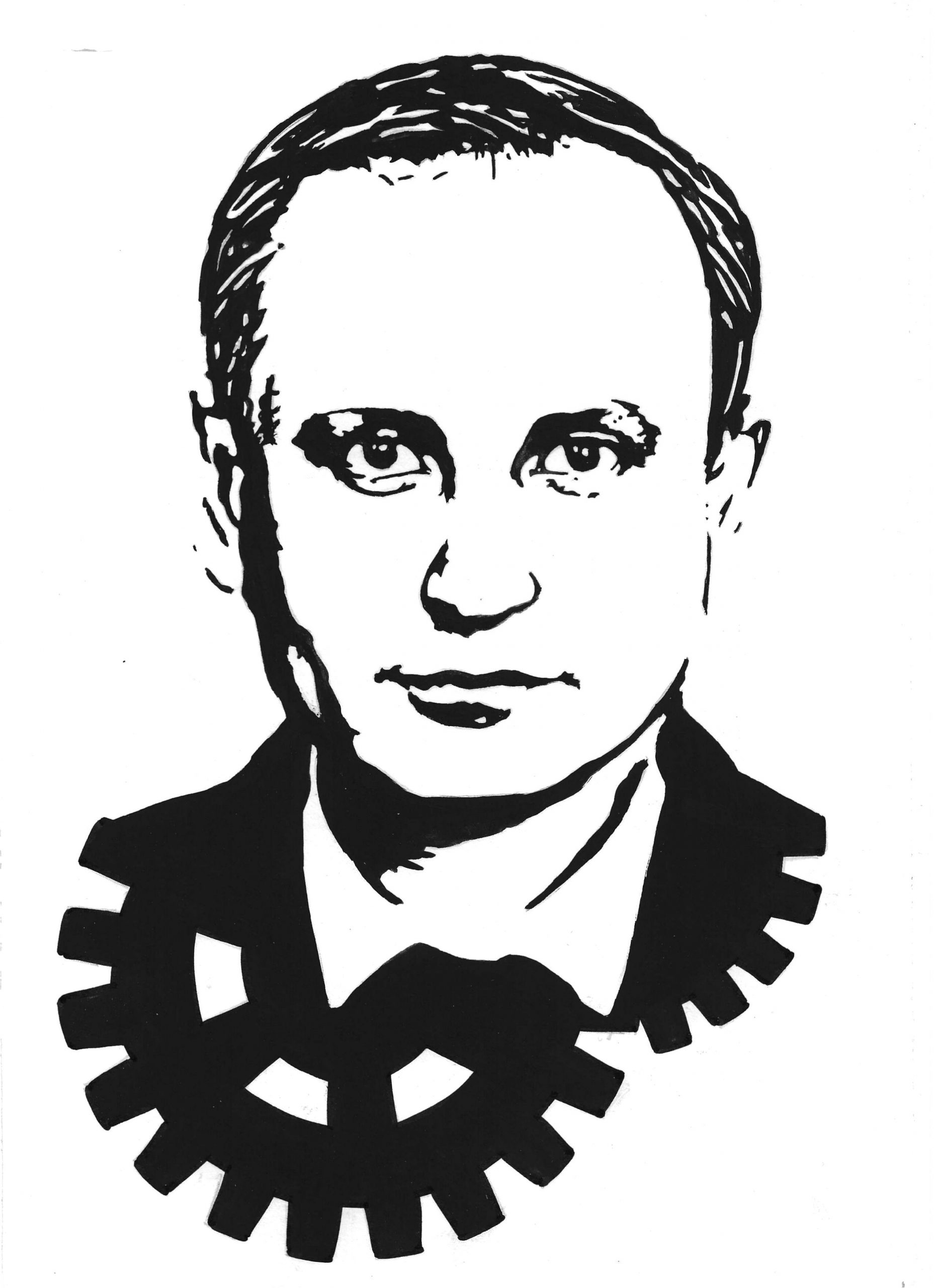
Liderul echipei, care a proiectat primul satelit moldovenesc TUMnanoSAT, care a ajuns în Cosmos cu ajutorul NASA, satelitul cntărea un kilogram şi a fost proiectat, construit și testat, timp de 3 ani.
Activități de cercetare. Un exemplu de aplicare a ştiinţei computaţionale este modelarea matematică a proceselor de contact dintre corpuri în general deformabile. Autorul a dezvoltat studiul problemelor de contact intern sau extern, punctiform, liniar sau curbiliniu, cu aplicabilitate în calculul organelor de maşini, cu destinație generală sau specială. Procesul de contact nu are natură pur mecanică, ci este mai curând, o interacţiune complexă între procese mecanice, termice şi chimice. Astfel, a fost abordată aplicarea modelelor matematice, care descriu procesul de contact, soluţionarea lor cu metoda elementului finit şi stabilirea unui cadru general pentru derivarea estimărilor a posteriori ale erorii, utilizând teoria dualităţii. A elaborat metode de modelare și simulare a interacțiunii palelor cu profil aero/hidrodinamic cu fluidul, puse la baza elaborării rotoarelor sistemelor de conversie a energiei eoliene și hidrualice cinetice de curgere a curenților de apă. Acum treizeci de ani, se credea imposibil de a efectua simularea numerică a turbulenţei, cu reprezentarea explicită a mişcării haotice la toate scările de lungime şi de timp. A participat în peste 20 de proiecte de cercetare, inclusiv, în 6 proiecte internaționale (SCOPES, Tempus, BSUN, DFG, SEE Transnational Cooperation Programe, BSEC HDF, Guvernul României, în programul KiboCUBE cu proiectul TUMnanoSAT. ș.a.). În domeniul tehnologiei spațiale colaborează fructuos Agenția Aerospațială Europeană (ESA), Japan Aerospace Exploration Agency (JAXA), Japan Manned Space Systems Corporation (JAMSS), inclusiv, în 4 proiecte de cercetare în calitate de director de proiect. Actualmente: este director de proiect de stat pentru 4 ani în domeniul Tehnologiilor spațiale. Prin lucrările sale prof. dr. hab. V. Bostan a contribuit parțial la realizarea dezvoltării conceptuale a tehnicii moderne, inclusiv, a motoarelor cu reacţie, a avioanelor şi navelor, a automobilelor şi a sistemelor de conversie a surselor regenerabile de energie (SRE). Conducător de doctorat: La specialităţile „Modelare, metode matematice, produse program”, „Teoria maşinilor,mecatronică”. A pregătit 1 doctor în ştiinţe tehnice, este conducător ştiinţific la 4 teze de doctor. Contribuie activ la procesul didactic la toate cele trei cicluri, a elaborat o serie de noi discipline (Mecanica mediilor continui; Probleme de contact; Dinamica computațională a fluidelor; Sisteme de conversie a energiilor regenerabile; Modelarea matematică a inundațiilor; Controlul atitudinii micro-sateliților; Analiza numerică; Metoda elementelor și volumelor finite; Modelare matematică). Este autor a apr. 200 lucrări științifice, inclusiv 7 monografii și manuale (2 monografii editate la editura Springer) și 25 brevete de invenție.
(www.utm.md)
Viorel BOSTAN – EN
Leader of the team that designed the first Moldovan satellite TUMnanoSAT, which reached space with the assistance of NASA (National Aeronautics and Space Administration). The satellite weighed one kilogram and was designed, built and tested over a period of 3 years.
Research Activities. An example of the application of computational science is the mathematical modeling of contact processes between generally deformable bodies. The author has developed the study of internal or external, point, linear, or curvilinear contact problems, with applicability in the calculation of machine elements for general or special purposes. The contact process is not purely mechanical in nature but is rather a complex interaction between mechanical, thermal, and chemical processes. Thus, the application of mathematical models describing the contact process was addressed, as well as their solution using the finite element method and the establishment of a general framework for deriving a posteriori error estimates using duality theory.
He has developed methods for modeling and simulating the interaction of blades with aero/hydrodynamic profiles with the fluid, which form the basis for the development of rotors for wind and kinetic hydraulic energy conversion systems from water currents. Thirty years ago, it was considered impossible to perform numerical simulation of turbulence with explicit representation of chaotic motion at all length and time scales. He has participated in over 20 research projects, including 6 international projects (SCOPES, Tempus, BSUN, DFG, SEE Transnational Cooperation Program, BSEC HDF, the Government of Romania, the KiboCUBE program with the TUMnanoSAT project, etc.). In the field of space technology, he collaborates fruitfully with the European Space Agency (ESA), the Japan Aerospace Exploration Agency (JAXA), and the Japan Manned Space Systems Corporation (JAMSS), including in 4 research projects as project director. Currently, he is a state project director for a 4-year term in the field of space technologies.
Through his works, Prof. Dr. Hab. V. Bostan has contributed to the realization of the conceptual development of modern technology, including jet engines, airplanes and ships, automobiles, and renewable energy conversion systems (RES).
Doctoral Supervisor: In the specialties „Modeling, mathematical methods, software products” and „Theory of machines, mechatronics.” He has trained 1 doctor of technical sciences and is the scientific supervisor for 4 doctoral theses.
He actively contributes to the educational process at all three cycles and has developed a series of new disciplines (Continuum Mechanics; Contact Problems; Computational Fluid Dynamics; Renewable Energy Conversion Systems; Mathematical Modeling of Floods; Micro-satellite Attitude Control; Numerical Analysis; Finite Element and Volume Method; Mathematical Modeling).
He is the author of approx. 200 scientific works, including 7 monographs and textbooks (2 monographs published by Springer) and 25 invention patents.
(www.utm.md)
Виорел БОСТАН – RU
Руководитель команды, которая спроектировала первый молдавский спутник TUMnanoSAT, достигший космоса при содействии NASA (Национальное управление по аэронавтике и исследованию космического пространства). Спутник весил один килограмм и был спроектирован, построен и испытан в течение 3 лет.
Исследовательская деятельность. Примером применения вычислительных наук является математическое моделирование контактных процессов между телами, деформируемыми в общем случае. Автор развил изучение задач внутреннего или внешнего, точечного, линейного или криволинейного контакта, применимых в расчетах деталей машин общего или специального назначения. Контактный процесс не имеет чисто механической природы, а скорее представляет собой сложное взаимодействие между механическими, тепловыми и химическими процессами. Таким образом, была рассмотрена применимость математических моделей, описывающих контактный процесс, их решение методом конечных элементов и установление общего подхода для получения апостериорных оценок погрешности с использованием теории двойственности. Разработал методы моделирования и симуляции взаимодействия лопастей аэро/гидродинамического профиля с текучей средой, которые легли в основу разработки роторов систем преобразования энергии ветра и кинетической энергии водных потоков. Тридцать лет назад считалось невозможным выполнить численное моделирование турбулентности с явным представлением хаотического движения на всех масштабах длины и времени. Участвовал в более чем 20 исследовательских проектах, в том числе в 6 международных проектах (SCOPES, Tempus, BSUN, DFG, Программа транснационального сотрудничества Юго-Восточной Европы, BSEC HDF, Правительство Румынии, программа KiboCUBE с проектом TUMnanoSAT и др.). В области космических технологий плодотворно сотрудничает с Европейским космическим агентством (ESA), Японским агентством аэрокосмических исследований (JAXA), корпорацией Japan Manned Space Systems (JAMSS), в том числе в 4 исследовательских проектах в качестве руководителя проекта. В настоящее время: является руководителем государственного проекта на 4 года в области космических технологий.
Своими работами проф. д-р хаб. В. Бостан частично внес вклад в концептуальную разработку современной техники, включая реактивные двигатели, самолеты и суда, автомобили и системы преобразования возобновляемых источников энергии (ВИЭ).
Научный руководитель: по специальностям «Моделирование, математические методы, программные продукты», «Теория машин, мехатроника». Подготовил 1 доктора технических наук (PhD), является научным руководителем 4 докторских диссертаций.
Активно участвует в учебном процессе на всех трех циклах, разработал ряд новых дисциплин (Механика сплошных сред; Контактные задачи; Вычислительная гидродинамика; Системы преобразования возобновляемых источников энергии; Математическое моделирование наводнений; Управление ориентацией микроспутников; Численный анализ; Метод конечных и объемных элементов; Математическое моделирование).
Является автором около 200 научных работ, включая 7 монографий и учебников (2 монографии изданы в издательстве Springer) и 25 патентов на изобретения.
(www.utm.md)