
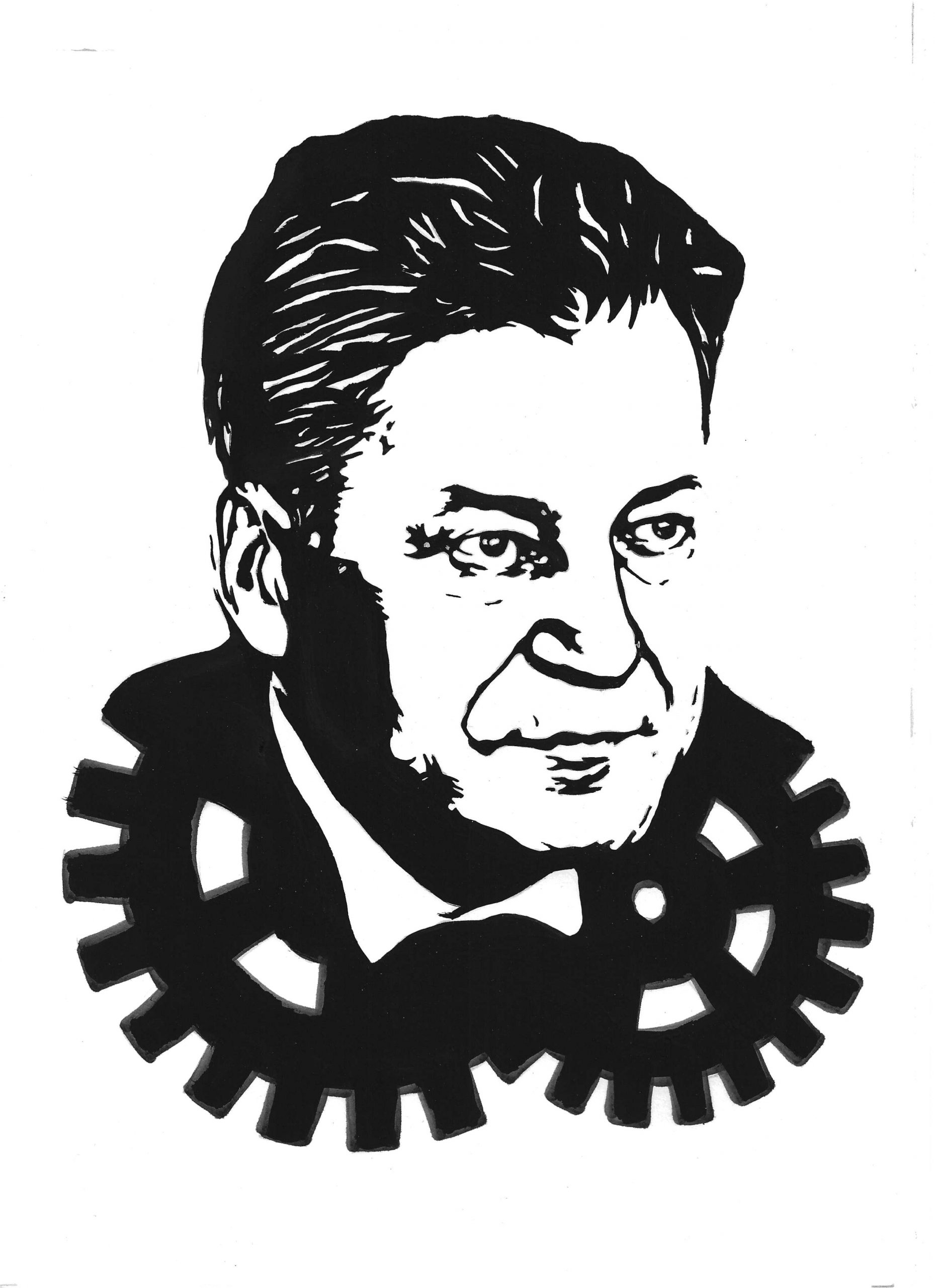
A creat un nou domeniu, Energonica, în legătură cu care a publicat lucrări și a susținut conferințe în țară și în străinătate. Pentru conceptul de participație a energiei specifice, introdus de principiul energiei critice, s-a propus denumirea de „criteriul Jinescu» (1999).
Născut la 10 octombrie 1940 la Ruseni (în prezent în Republica Moldova), Valeriu Jinescu a urmat gimnaziul în comuna Brateș, raionul Galați și a finalizat studiile secundare la Colegiul Național „Vasile Alecsandri” din Galați. Și-a continuat studiile la Institutul Politehnic Bucureșt, obținând diploma de inginer în 1963. A obținut diploma de doctor național la aceeași universitate în 1986 cu teza „Contribuții la teoria mașinii de extrudere cu un melc”.
Activități profesionale: Ca șef de promoție, a fost reținut în învățământul superior și, în 1963, a început să predea ca asistent universitar la Universitatea Politehnică din București. A fost promovat ca lector în 1975 și profesor în 1990. Între 1975 și 1985 a fost șeful catedrei de Utilaj Tehnologic-Chimic, iar din 1992 și în prezent este șeful catedrei Echipamente de Proces. A fost profesor invitat la Universitatea Jean Monnet din Saint-Étienne (Franța), Universitatea din Lund (Suedia), Universitatea de Tehnologie Chalmers din Göteborg (Suedia), Universitatea Duke (SUA) și Universitatea Paris-Est-Créteil-Val-de-Marne.
A predat cursurile: Calculul și construcția utilajului chimic, Echipamente de proces, Mașini pentru prelucrarea materialelor polimerice, Reologie aplicată, Termomecanica și dinamica structurilor mecanice, Deteriorarea materialelor și calculul duratei de viață.
Cercetări: Valeriu Jinescu a efectuat cercetări în domeniile: echipamente sub presiune, mașini pentru prelucrarea materialelor polimerice, reologie aplicată, analiza stărilor de tensiuni, principiile și legile energiei; suprapunerea efectelor la solicitarea materialelor cu comportare neliniară; calculul structurilor solicitate la oboseală, în regim tranzitoriu și în condiții de fluaj; dispozitive de amestecare ș.a. A publicat peste 200 de lucrări științifice. A formulat: principiul energiei critice, principiul accesibilității energiei, principiul ireversibilității, principiul reluctanței, precum și legea stărilor critice ale materiei, legea echivalenței proceselor și fenomenelor, legea coexistenței și complementarității ordinii și dezordinii și legea regimurilor tranzitorii.
Distincții: Valeriu Jinescu a fost distins cu: premiul „Aurel Vlaicu” al Academiei Române (1971); premiul Revistei de Chimie (1999); premiul „Opera Omnia” al Consiliului Național al Cercetării Științifice din Învățământul Superior (2001) și diploma Asociației Generale a Inginerilor din România (2004). I s-a acordat titlul de Doctor Honoris Causa al Universității „Vasile Alecsandri” din Bacău (2006), al Universității Politehnica Timișoara (2008), al Universității „Dunărea de Jos” din Galați (2013) și al Universității Tehnice a Moldovei (2018).
Valeriu JINESCU – EN
He created a new field called “Energonics”, about which he published scientific works and delivered lectures both in the country and abroad. For the concept of participation of specific energy introduced by the principle of critical energy, the term “Jinescu criterion” (1999) was proposed.
Born on October 10, 1940, in Ruseni (currently in the Republic of Moldova), Valeriu Jinescu attended middle school in the commune of Brateș, Galați district, and completed his secondary education at the „Vasile Alecsandri” National College in Galați. He continued his studies at the Polytechnic Institute of Bucharest, obtaining an engineering degree in 1963. He received his national doctorate from the same university in 1986 with the thesis „Contributions to the theory of the single-screw extruder.”
Professional Activities: As the top graduate of his class, he was retained in higher education, and in 1963, he began teaching as a university assistant at the Polytechnic University of Bucharest. He was promoted to lecturer in 1975 and professor in 1990. Between 1975 and 1985, he was the head of the Chemical Technological Equipment Department, and since 1992, he has been the head of the Process Equipment Department. He was a visiting professor at the Jean Monnet University in Saint-Étienne (France), Lund University (Sweden), Chalmers University of Technology in Gothenburg (Sweden), Duke University (USA), and the University of Paris-Est-Créteil-Val-de-Marne.
Courses Taught: Calculation and construction of chemical equipment, Process equipment, Machinery for processing polymeric materials, Applied rheology, Thermomechanics and dynamics of mechanical structures, Deterioration of materials and lifetime calculation.
Research: Valeriu Jinescu conducted research in the fields of: pressure equipment, machinery for processing polymeric materials, applied rheology, stress state analysis, principles and laws of energy; superposition of effects in the loading of materials with non-linear behavior; calculation of structures subjected to fatigue, in transient regimes, and under creep conditions; mixing devices, etc. He has published over 200 scientific papers. He formulated: the principle of critical energy, the principle of energy accessibility, the principle of irreversibility, the principle of reluctance, as well as the law of critical states of matter, the law of equivalence of processes and phenomena, the law of coexistence and complementarity of order and disorder, and the law of transient regimes.
Distinctions: Valeriu Jinescu was awarded: the „Aurel Vlaicu” prize of the Romanian Academy (1971); the Revista de Chimie prize (1999); the „Opera Omnia” prize of the National Council for Scientific Research in Higher Education (2001), and the diploma of the General Association of Engineers in Romania (2004). He was granted the title of Doctor Honoris Causa by the „Vasile Alecsandri” University of Bacău (2006), the Polytechnic University of Timișoara (2008), the „Dunărea de Jos” University of Galați (2013), and the Technical University of Moldova (2018).
Он создал новое научное направление – «Энергоника», по которому опубликовал научные работы и выступал с докладами в стране и за рубежом. Для концепции участия удельной энергии, введённой принципом критической энергии, было предложено название «критерий Жинеску» (1999 г.).
Валериу Жинеску родился 10 октября 1940 года в селе Русень (в настоящее время в Республике Молдова). Он окончил гимназию в коммуне Братеш уезда Галац и завершил среднее образование в Национальном колледже им. Василе Александри в Галаце. Продолжил обучение в Политехническом институте Бухареста, получив диплом инженера в 1963 году. В 1986 году в том же университете получил степень доктора наук, защитив диссертацию на тему «Вклад в теорию одношнекового экструдера».
Профессиональная деятельность: Как лучший выпускник курса, он был оставлен для работы в системе высшего образования и в 1963 году начал преподавать в качестве ассистента в Бухарестском политехническом университете. В 1975 году был переведен на должность лектора, а в 1990 году получил звание профессора. С 1975 по 1985 год возглавлял кафедру химико-технологического оборудования, а с 1992 года по настоящее время является заведующим кафедрой технологического оборудования. Был приглашенным профессором в Университете Жана Монне в Сент-Этьене (Франция), Лундском университете (Швеция), Технологическом университете Чалмерса в Гётеборге (Швеция), Университете Дьюка (США) и Университете Париж-Эст-Кретей-Валь-де-Марн.
Преподаваемые курсы: Расчет и конструирование химического оборудования, технологическое оборудование, машины для переработки полимерных материалов, прикладная реология, термомеханика и динамика механических конструкций, разрушение материалов и расчет срока службы.
Исследования: Валериу Жинеску проводил исследования в таких областях, как: оборудование, работающее под давлением, машины для переработки полимерных материалов, прикладная реология, анализ напряженного состояния, принципы и законы энергии; суперпозиция эффектов при нагружении материалов с нелинейным поведением; расчет конструкций, подверженных усталостному нагружению, переходным режимам и условиям ползучести; смесительные устройства и др. Опубликовал более 200 научных работ. Сформулировал: принцип критической энергии, принцип доступности энергии, принцип необратимости, принцип релактанса, а также закон критических состояний материи, закон эквивалентности процессов и явлений, закон сосуществования и взаимодополняемости порядка и хаоса, закон переходных режимов.
Награды: Валериу Жинеску был удостоен премии «Аурел Влайку» Румынской академии (1971), премии «Журнала химии» (1999), премии «Opera Omnia» Национального совета по научным исследованиям в высшем образовании (2001) и диплома Генеральной ассоциации инженеров Румынии (2004). Ему было присвоено звание почетного доктора (Doctor Honoris Causa) Университета им. Василе Александри в Бакэу (2006), Политехнического университета Тимишоары (2008), Университета «Dunărea de Jos» в Галаце (2013) и Технического университета Молдовы (2018).