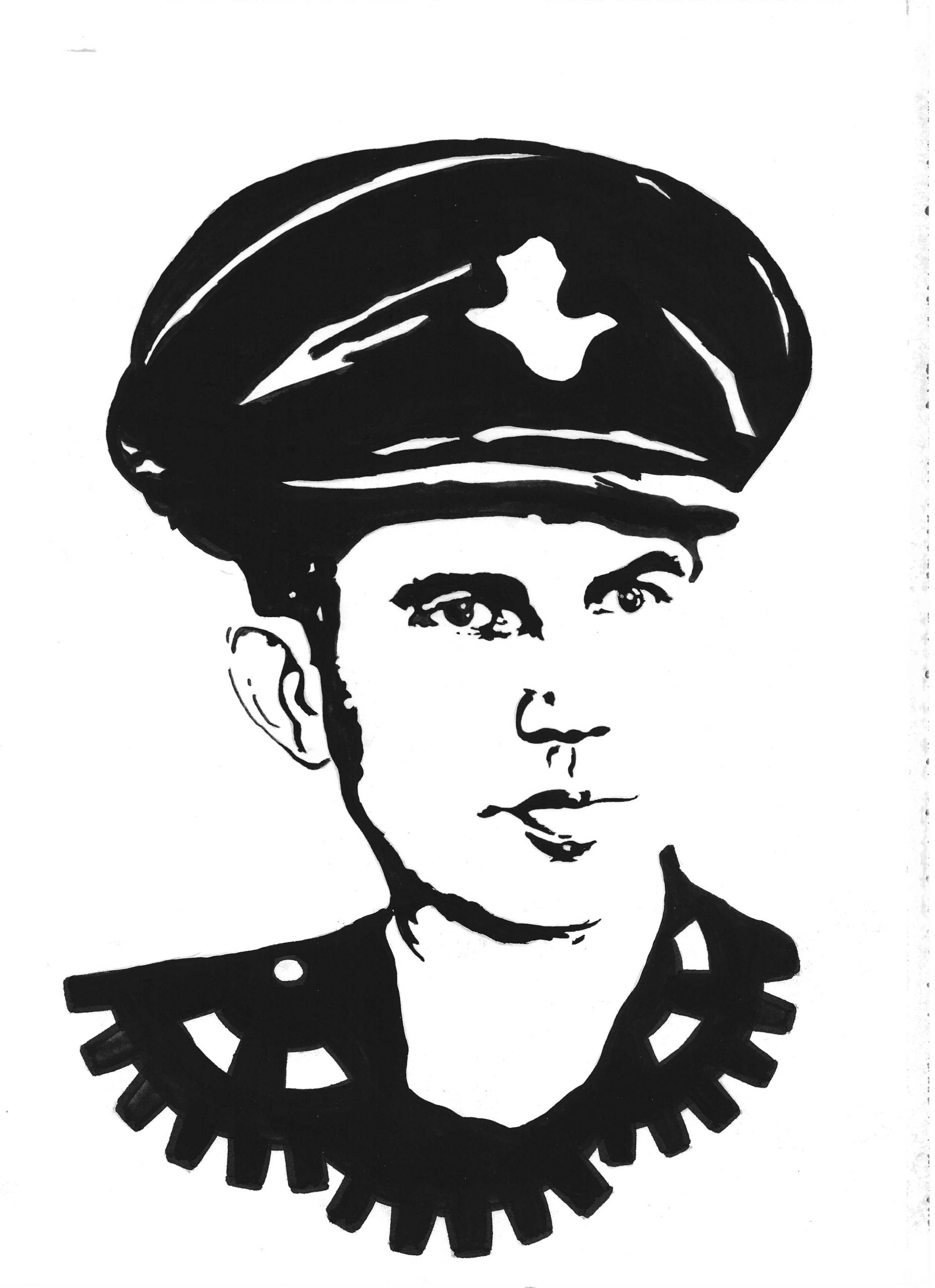
Pioner în domeniu hidroaviației din România. Primul director al TAROM. La 14 mai 1935, a participat la un zbor legendar, cînd trei hidroavioane Savoia Marchetti 35 au efectuat un zbor fără escală pe ruta Constanța – Istanbul – Atena – Constanța. Acesta a fost un eveniment senzațional pentru acea vreme.
Iată textul corectat, cu toate diacriticele adăugate și normele de punctuație și capitalizare ajustate conform limbii române:
Născut la 21 iunie 1907 în comuna Bulaești, jud. Orhei, aproape de Nistru în Basarabia, și-a petrecut copilăria în partea de nord-vest a Basarabiei, chiar lângă malul Prutului – pe atunci granița de est a României – în comunele Costești și Susleni, tot în județul Orhei.
Tatăl era învățător, dar cu pregătire teologică, ambii părinți fiind descendenți ai unor familii de preoți. Școala primară a început-o în comuna Costești și a terminat-o în comuna Susleni, unde tatăl său a fost mutat cu serviciul. Părinții au vrut să-l pregătească pentru a deveni preot, dar nu au putut trece de încăpățânarea micului Vladimir, care își dorea altă profesie.
În anul 1918 a dat examen la liceul „B.P. Hasdeu” din Chișinău, iar la 17 ani se înscrie ca voluntar la Reg. 3 Roșiori din Bârlad. De aici este repartizat la Divizia de Mare, de la Constanța, cu gradul de sergent. În cadrul Diviziei face parte din echipajul canonierei „Lt. Dumitrescu”. Când acest vas este trimis în reparație, sergentul Stângaciu este repartizat la Atelierul de Construcție al lui Nicolau, din Constanța. Acest Nicolau era socrul directorului de bancă Gh. Georgescu, cel care a finanțat construcția hidroavionului „Getta”, după planurile ing. Radu Stoica.
Sosind ziua zborului pentru omologarea hidroavionului „Getta” – era în 15 august 1925 – de către pilotul vestit Romeo Popescu, din partea Inspectoratului Aeronautic, mecanicul sergent Stângaciu era prezent lângă hidroavion. Cum în acea zi mecanicul de bord care trebuia să-l însoțească în zbor pe pilotul recepționer a lipsit, fiind bolnav, s-a creat o problemă. Căpitanul Romeo Popescu l-a întrebat pe serg. Stângaciu Vladimir dacă are curajul să zboare cu el, întrucât sergentul mecanic știa totul despre hidroavion, luase parte la construcția acestuia. Stângaciu a fost de acord și astfel a executat primul zbor din viața sa, cu cel mai renumit pilot al acelui timp din România; era 15 august 1925 și tânărul Vladimir avea 18 ani, iar hidroavionul acesta avea să-l marcheze pe Stângaciu de-a lungul vieții și activității sale. Trebuie să precizăm că zborul acestui hidroavion „Getta”/Radu Stoica era zborul primului hidroavion construit în România… de remarcat!
Tot la această vârstă, serg. mecanic Stângaciu Vladimir, la recomandarea Lt. Comandorului mecanic Petrescu Ion, șeful Atelierului Arsenalului Aeronautic de la Cotroceni-București (ce fusese prezent la zborul de omologare al hidroavionului „Getta”), s-a prezentat la Școala Specială pentru Aviație de la Cotroceni (mai târziu purtând numele de Școala de Ofițeri de Aviație – S.O.Av.). În urma examenului depus este declarat admis, iar peste doi ani, la 1 iulie 1927, este avansat sublocotenent mecanic (în primul an de la avansarea ca Slt. mecanic denumirea era de „Ofițer Mecanic clasa a III-a”).
După avansare a fost repartizat la Grupul de Aviație de la Constanța, unde activează până în anul 1942 – bineînțeles că această perioadă cuprinde și timpul detașărilor de scurtă durată către alte unități. Grupul de Aviație în anul 1930 se transformă în Flotila de Hidroaviație; în această Flotilă, Vladimir Stângaciu este avansat grad după grad, având mari realizări profesionale, încă din 1928 el fiind ofițer mecanic-șef, mecanic navigant și șef al serviciului tehnic.
Un an mai târziu, în mai 1929, este prezent la sosirea Escadrilei de hidroavioane italiene care se întorcea de la Odessa, condusă de către Mareșalul av. Italo Balbo (vezi articolul din „Orizont Aviatic” nr. 2/dec. 2002). Escadra era formată din 35 de hidroavioane S-55, două hidroavioane S-59 Bis și un hidroavion trimotor CANT, de transport; a fost cea mai mare formație de hidroavioane din toate timpurile care ne-a vizitat țara…
În 1931 face parte din comisia de recepție și omologare, în Italia, la Uzina S.I.A.I. din Sesto Calende, de pe malul lacului Maggiore, unde Statul Român comandase: 14 hidroavioane de recunoaștere S-62 Bis, 7 hidroavioane de bombardament și torpiloare Savoia S-55 și 6 hidroavioane pentru școală și antrenament Savoia S-56.
În luna august, anul 1932, cu ocazia transportului hidroavionului S-62 Bis, în calitate de mecanic de bord (pilot Cpt. av. Borcescu Gh.) au amerizat la Porto Rose pentru alimentare. În timpul încercării de pornire a motorului s-a produs o explozie în urma căreia Stângaciu a fost grav rănit, fiind spitalizat o perioadă de trei luni în Italia.
În anul 1935 participă la un raid cu hidroavionul S-55 în calitate de mecanic de bord și pilot secund, pe ruta Constanța – Istanbul – Atena – Constanța. În perioada 1936–1938 face parte din comisia de recepție și control pentru hidroaviație (amfibie) de la I.A.R. Brașov, iar în ianuarie 1942 este detașat la Flotila 1 Vânătoare Pipera, ca șef al serviciului tehnic. Tot în acest an este detașat, în calitate de ajutor tehnic al comandantului, la Centrul de pilotaj (militar) de la Ziliștea-Boboc (Buzău). Aici răspunde de avioanele ieșite din reparațiile făcute de către o secție a Fabricii ICAR-București.
După mersul vremii, războiului și perindărilor, îl regăsim la Turda-Balomir-Luncani, răspunzând de reparațiile avioanelor de luptă, iar în 1946, făcând parte din Divizia Aviație București, în cadrul serviciului tehnic, este trecut în rezervă conform Legii 433, cu gradul de Lt. Colonel. Tot acum (1946) este numit șef al Atelierului pentru construcția avioanelor Fieseler Storch, în cadrul Fabricii ICAR București.
În 1948 trece la Compania (Societatea!) TARS, în funcția de director al atelierelor de reparații, iar la 18 septembrie 1954, odată cu înființarea Companiei TAROM, este numit aici director general. Și între 1956–1960, Vladimir Stângaciu a predat, în cadrul Institutului Politehnic București, cursul de „aparate de bord”.
Pentru activitatea depusă a fost decorat cu: Virtutea Aeronautică cu Spade, clasa Crucea de Aur, Coroana României, Steaua României, Crucea de Război (cehoslovacă), Coroana Italiei clasa Cavaler și alte medalii și distincții.
(http://www.virtualarad.net)
Vladimir STÂNGACIU – EN
Pioneer in the field of seaplane aviation in Romania. The first director of „TAROM” (Romanian Air Transport). On May 14, 1935, he participated in a legendary flight, when three seaplanes „Savoia-Marchetti S.35” performed a non-stop flight on the route Constanța – Istanbul – Athens – Constanța. This was a sensational event for that time.
Born on June 21, 1907, in the commune of Bulaești, Orhei County, near the Dniester in Bessarabia, he spent his childhood in the north-western part of Bessarabia, right next to the banks of the Prut – at that time the eastern border of Romania – in the communes of Costești and Susleni, also in Orhei County.
His father was a teacher but with theological training, both parents being descendants of priest families. He began primary school in the commune of Costești and finished it in the commune of Susleni, where his father had been transferred for work. His parents wanted to prepare him to become a priest, but they could not overcome the stubbornness of little Vladimir, who desired another profession.
In the year 1918, he took the exam at the „B.P. Hasdeu” High School in Chișinău, and at the age of 17, he enlisted as a volunteer in the 3rd Roșiori Regiment in Bârlad. From here he was assigned to the Sea Division in Constanța, with the rank of sergeant. Within the Division, he was part of the crew of the gunboat „Lt. Dumitrescu”. When this vessel was sent for repairs, Sergeant Stângaciu was assigned to Nicolau’s Construction Workshop in Constanța. This Nicolau was the father-in-law of bank director Gh. Georgescu, the one who financed the construction of the „Getta” hydroplane, according to the plans of engineer Radu Stoica.
As the day of the flight for the certification of the „Getta” hydroplane arrived – it was August 15, 1925 – by the famous pilot Romeo Popescu on behalf of the Aeronautical Inspectorate, mechanic Sergeant Stângaciu was present near the hydroplane. Since on that day the flight engineer who was supposed to accompany the receiving pilot on the flight was absent due to illness, a problem arose. Captain Romeo Popescu asked Sgt. Stângaciu Vladimir if he had the courage to fly with him, since the mechanic sergeant knew everything about the hydroplane, having taken part in its construction. Stângaciu agreed and thus executed the first flight of his life, with the most famous pilot of that time in Romania; it was August 15, 1925, and young Vladimir was 18 years old, and this hydroplane was to mark Stângaciu throughout his life and activity. We must specify that the flight of this „Getta”/Radu Stoica hydroplane was the flight of the first hydroplane built in Romania… remarkable!
Also at this age, mechanic Sgt. Stângaciu Vladimir, upon the recommendation of mechanic Lt. Commander Petrescu Ion, head of the Aeronautical Arsenal Workshop at Cotroceni-Bucharest (who had been present at the certification flight of the „Getta” hydroplane), presented himself at the Special Aviation School at Cotroceni (later bearing the name of the Aviation Officers School – S.O.Av.). Following the exam he took, he was declared admitted, and two years later, on July 1, 1927, he was promoted to mechanic sub-lieutenant (in the first year after his promotion as mechanic Slt., the title was „Mechanical Officer 3rd Class”).
After his promotion, he was assigned to the Aviation Group in Constanța, where he remained active until 1942 – of course, this period also includes the time of short-term detachments to other units. In 1930, the Aviation Group was transformed into the Hydroaviation Flotilla; within this Flotilla, Vladimir Stângaciu was promoted rank after rank, achieving great professional milestones, as he had already been chief mechanical officer, flight engineer, and head of the technical service since 1928.
A year later, in May 1929, he was present at the arrival of the Italian hydroplane Squadron returning from Odessa, led by Air Marshal Italo Balbo (see the article in „Orizont Aviatic” no. 2/Dec. 2002). The squadron consisted of 35 S-55 hydroplanes, two S-59 Bis hydroplanes, and a three-engine CANT transport hydroplane; it was the largest formation of hydroplanes of all time to visit our country…
In 1931, he was part of the reception and certification commission in Italy, at the S.I.A.I. Plant in Sesto Calende, on the shores of Lake Maggiore, where the Romanian State had ordered: 14 S-62 Bis reconnaissance hydroplanes, 7 Savoia S-55 bomber and torpedo hydroplanes, and 6 Savoia S-56 school and training hydroplanes.
In August 1932, during the transport of the S-62 Bis hydroplane, in his capacity as flight engineer (pilot Capt. of aviation Borcescu Gh.), they landed on water at Porto Rose for refueling. During the attempt to start the engine, an explosion occurred, as a result of which Stângaciu was seriously injured, being hospitalized for a period of three months in Italy.
In the year 1935, he participated in a raid with the S-55 hydroplane as flight engineer and co-pilot, on the route Constanța – Istanbul – Athens – Constanța. During the 1936–1938 period, he was part of the reception and control commission for hydroaviation (amphibious) at I.A.R. Brașov, and in January 1942, he was detached to the 1st Fighter Flotilla Pipera as head of the technical service. Also in this year, he was detached, as technical assistant to the commander, to the (military) Pilot Training Center at Ziliștea-Boboc (Buzău). Here, he was responsible for the aircraft coming out of repairs made by a branch of the ICAR-Bucharest Factory.
Following the course of time, war, and wanderings, we find him at Turda-Balomir-Luncani, in charge of combat aircraft repairs, and in 1946, as part of the Bucharest Aviation Division within the technical service, he was placed in reserve according to Law 433, with the rank of Lt. Colonel. Also at this time (1946), he was appointed head of the Workshop for the construction of Fieseler Storch aircraft, within the ICAR Bucharest Factory.
In 1948, he moved to the TARS Company (Society!), in the position of director of the repair workshops, and on September 18, 1954, with the establishment of the TAROM Company, he was appointed General Director here. And between 1956–1960, Vladimir Stângaciu taught the „onboard instruments” course at the Polytechnic Institute of Bucharest.
For the activity carried out, he was decorated with: the Aeronautical Virtue with Swords, Golden Cross class, the Order of the Crown of Romania, the Order of the Star of Romania, the War Cross (Czechoslovak), the Order of the Crown of Italy, Knight class, and other medals and distinctions.
(http://www.virtualarad.net)
Владимир СТЫНГАЧУ – RU
Пионер в области гидроавиации в Румынии. Первый директор «TAROM» (Румынские воздушные перевозки). 14 мая 1935 года он участвовал в легендарном полёте, когда три гидросамолёта «Savoia-Marchetti S.35» совершили беспосадочный перелёт по маршруту Констанца – Стамбул – Афины – Констанца. Это было сенсационным событием для того времени.
Родился 21 июня 1907 года в коммуне Булаешты, уезд Орхей, недалеко от Днестра в Бессарабии, свое детство провел в северо-западной части Бессарабии, прямо у берега Прута – в то время восточной границы Румынии – в коммунах Костешты и Суслены, также в уезде Орхей.
Отец был учителем, но с теологическим образованием, оба родителя были потомками из семей священников. Начальную школу он начал в коммуне Костешты и закончил в коммуне Суслены, куда его отец был переведен по службе. Родители хотели подготовить его к тому, чтобы он стал священником, но не смогли преодолеть упрямство маленького Владимира, который желал другую профессию.
В 1918 году он сдал экзамен в лицей «Б. П. Хашдеу» в Кишиневе, а в 17 лет записался добровольцем в 3-й полк рошиоров в Бырладе. Отсюда он был распределен в Морскую дивизию в Констанце в звании сержанта. В составе Дивизии он входил в экипаж канонерской лодки «Лт. Думитреску». Когда это судно было отправлено в ремонт, сержант Стынгачу был распределен в Строительную мастерскую Николау в Констанце. Этот Николау был тестем директора банка Г. Георгеску, того самого, кто профинансировал строительство гидросамолета «Getta» по чертежам инженера Раду Стоики.
Когда наступил день полета для сертификации гидросамолета «Getta» – это было 15 августа 1925 года – знаменитым пилотом Ромео Попеску от имени Авиационной инспекции, механик-сержант Стынгачу присутствовал возле гидросамолета. Так как в тот день бортинженер, который должен был сопровождать пилота-приемщика в полете, отсутствовал по болезни, возникла проблема. Капитан Ромео Попеску спросил сержанта Владимира Стынгачу, хватит ли у него смелости полететь с ним, поскольку сержант-механик знал о гидросамолете всё, так как принимал участие в его строительстве. Стынгачу согласился и, таким образом, совершил первый полет в своей жизни с самым известным пилотом того времени в Румынии; это было 15 августа 1925 года, и молодому Владимиру было 18 лет, а этот гидросамолет оставит глубокий след в жизни и деятельности Стынгачу. Следует уточнить, что полет этого гидросамолета «Getta» / Раду Стоика был полетом первого гидросамолета, построенного в Румынии… стоит отметить!
Также в этом возрасте механик-сержант Владимир Стынгачу по рекомендации лейтенант-командора механика Иона Петреску, начальника мастерской Авиационного арсенала в Котрочень-Бухаресте (который присутствовал при приемочном полете гидросамолета «Getta»), явился в Специальную авиационную школу в Котрочень (позже носившую название Школа офицеров авиации – S.O.Av.). По результатам сданного экзамена он был объявлен принятым, а через два года, 1 июля 1927 года, был произведен в сублокотененты-механики (в первый год после производства в звание сублокотенента-механика должность называлась «Инженер-офицер III класса»).
После производства в звание он был распределен в Авиационную группу в Констанце, где служил до 1942 года – разумеется, этот период включает в себя и время краткосрочных командировок в другие части. В 1930 году Авиационная группа преобразуется во Флотилию гидроавиации; в этой Флотилии Владимир Стынгачу продвигается в званиях шаг за шагом, имея большие профессиональные достижения, причем уже с 1928 года он являлся главным инженером-офицером, летающим бортмехаником и начальником технической службы.
Год спустя, в мае 1929 года, он присутствует при прибытии итальянской эскадрильи гидросамолетов, возвращавшейся из Одессы под руководством маршала авиации Итало Бальбо (см. статью в «Orizont Aviatic» № 2/дек. 2002). Эскадра состояла из 35 гидросамолетов S-55, двух гидросамолетов S-59 Bis и одного трехмоторного транспортного гидросамолета CANT; это было самое крупное формирование гидросамолетов всех времен, посетившее нашу страну…
В 1931 году он входит в состав комиссии по приемке и сертификации в Италии на заводе S.I.A.I. в Сесто-Календе, на берегу озера Маджоре, где Румынское государство заказало: 14 разведывательных гидросамолетов S-62 Bis, 7 бомбардировочных и торпедоносных гидросамолетов Savoia S-55 и 6 учебных и тренировочных гидросамолетов Savoia S-56.
В августе 1932 года во время транспортировки гидросамолета S-62 Bis в качестве бортмеханика (пилот капитан авиации Г. Борческу) они приводнились в Порто-Розе для заправки. Во время попытки запуска двигателя произошел взрыв, в результате которого Стынгачу получил тяжелые ранения и находился на лечении в больнице в Италии в течение трех месяцев.
В 1935 году он участвует в перелете на гидросамолете S-55 в качестве бортмеханика и второго пилота по маршруту Констанца – Стамбул – Афины – Констанца. В период 1936–1938 годов входит в состав комиссии по приемке и контролю гидроавиации (амфибий) на заводе I.A.R. в Брашове, а в январе 1942 года прикомандирован к 1-й истребительной флотилии в Пипере в качестве начальника технической службы. Также в этом году он откомандирован в качестве технического помощника командира в Военный центр пилотирования в Зилиштя-Boboc (Бузэу). Здесь он отвечает за самолеты, вышедшие из ремонта, выполненного филиалом фабрики ICAR в Бухаресте.
По прошествии времени, войны и странствий мы находим его в Турде-Баломире-Лункани, где он отвечает за ремонт боевых самолетов, а в 1946 году, будучи сотрудником технической службы Бухарестской авиационной дивизии, он уволен в запас в соответствии с Законом 433 в звании подполковника. Тогда же (1946 г.) он назначен начальником мастерской по строительству самолетов Fieseler Storch на заводе ICAR в Бухаресте.
В 1948 году он переходит в компанию (общество!) TARS на должность директора ремонтных мастерских, а 18 сентября 1954 года, одновременно с созданием компании TAROM, назначается СЮДА генеральным директором. В период 1956–1960 годов Владимир Стынгачу читал в Бухарестском политехническом институте курс «бортовые приборы».
За проделанную деятельность был награжден: орденом «Авиационная доблесть» с мечами (класс Золотой крест), орденом Короны Румынии, орденом Звезды Румынии, Военным крестом (чехословацким), орденом Короны Италии (класс Кавалер) и другими медалями и знаками отличия.
(http://www.virtualarad.net)