
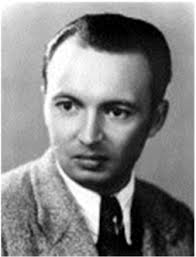
Creatorul motorului pentru avioanele IAR-80, care era în Top 4 mondial avioane de război, care concura cu producătorii de avioane din Germania, Marea Britanie și Japonia.
Inginerii din România au contribuit încă de la începuturile aeronauticii din prima jumătate a secolului al XX-lea la dezvoltarea acestui domeniu. Un exemplu edificator în acest sens este inginerul român de origine basarabeană, Teodor Gârneț.
Teodor Gârneţ s-a născut la 19 aprilie 1911 în Roşu – Cahul unde urmează Liceul „Cuza Vodă“ din Huşi. După promovarea liceului, acesta ia calea ingineriei aplicând la Institutului Politehnic din Timişoara în 1939, fiind repede remarcat pentru rapiditatea si eficiența cu care lucra. Termină acest ciclu de învățământ susţinând examenul de diplomă în iunie 1940, având ca subiect: motorul de avion, calculul şi proiectarea lui. Teodor Gârneţ termină facultatea cu aprecieri deosebite şi cu recomandarea pentru Industria Aeronautică Română (I.A.R. Braşov).
Cariera profesională a lui Teodor Gârneț
La terminarea facultăţii își începe activitatea la I.A.R. Braşov. Aflăm din autobiografia profesională că profesează în această instituție cu la fel de multă dedicare: “Încă de pe când lucram la proiectul de diplomă la I.A.R. Braşov, m-am remarcat printr-o străduinţă deosebită motivată de faptul că termenul proiectului coincidea cu termenele celor două ordine de mobilizare.” Această „hărnicie” a fost remarcată de ing. Müller von Wandau şeful biroului de studii motoare.”
În contextul social-politic al vremii a apărut problema unui avion necesar formării piloţilor, căci avioanele de vânătoare şi de bombardament din posesia armatei erau prea scumpe pentru a fi supuse neîndemânărilor unor începători. Astfel, Teodor Gârneţ a fost însărcinat cu proiectarea unui motor fezabil atât din punct de vedere al resurselor materiale necesare fabricarii cat și cu o manevrabilitate sporită.
Din propriile relatări aflăm: ”Am lucrat într-o totală izolare la definirea şi calculul organelor principale ale motorului, care urma să obţină denumirea de „I.A.R.-7M”. Surpriza a fost mare şi generală când s-a constatat că motorul dă în funcţionare o putere mai mare decât cea impusă la proiectare.” Acest motor constituia realizarea de vârf a aviaţiei româneşti, fiind unul din cele mai performante motoare în stea, depăşind toate motoarele similare aflate în serviciu în România atât pentru anul 1942 (data proiectării), dar chiar şi pentru anul 1990, după cum rezultă din rapoartele tehnice de testare ale motorului, cât şi din revistele de specialitate din perioada 1990-1995.
IAR-7M – Un motor de succes
Probele au fost făcute de personalul de deservire a bancului şi s-au consemnat în Raportul tehnic nr. 23215 din 4.11.1992. Puterea obţinută la turaţia de 2900 rot/min a fost de 429 CP în loc de 360 CP pentru care a fost proiectat, realizând şi o putere specifică de 45,2 CP/dm3 de cilindree.
După această performanță inginerească extraordinară, în multe reviste s-au publicat, în repetate rânduri, prezentări apreciative privind performanţele deosebite ale acestui motor: în revista „Ştiinţă şi Tehnică”, IAR-7M era denumit ”copilul teribil al motoarelor de aviaţie româneşti”; ing. Cristinariu Victor, directorul general, de atunci, al întreprinderii de aviaţie I.C.A.-Ghimbav şi ing. Dan Vardie îşi exprimă aprecierea acestui motor: “Avem de a face cu performanţele excepţionale, nu numai pentru 1942 (data proiectării), dar chiar şi pentru 1990, IAR-7M fiind unul din cele mai performante motoare în stea realizate pe întregul mapamond, depăşind toate motoarele similare aflate în serviciu în România”.
Din 1944, în baza înclinaţiilor şi pasiunilor pentru aplicaţii practice, obţine şi brevetul de mecanic-strungar, concurând cu meseriaşi specialişti consacraţi, astfel realizându-şi mult mai uşor propriile invenţii şi inovaţii.
În 1951, în baza experienţei tehnologice practice acumulate pe parcurs, a fost numit să coordoneze înfiinţarea Întreprinderii de reparaţii avioane şi motoare URMV3 şi, împreună cu 4 colegi, a condus următoarele sectoare, astfel:
o Secţia de uzinaj piese de motor şi avion – ing. Teodor Gârneţ;
o Secţia de montaj motoare – ing. Constantin Gheorghiu;
o Secţia de reparaţii avioane – ing. Iosif Şilimon;
o Secţia de fabricaţie avioane – ing. Radu Manicatide;
o Serviciul tehnic – ing. Erast Berenţan;
Contribuția la IAR-8
Inginerii români-basarabeni, au inventat și construit cel mai puternic avion românesc al epocii, faimosul IAR-80, un avion monoplan de vânatoare și bombardament în picaj realizat la IAR Brasov, care era comparabil cu cele mai moderne avioane de luptă, precum Bf 109 din Germania, Mitsubishi A6M Zero din Japonia, Hawker Hurricane și Supermarine Spitfire din Marea Britanie. Inginerii au lucrat zi și noapte pentru a-și finaliza această operă de artă mecanică, cu un motor de 1,000 de cai putere care-i permitea aparatului să ajungă la mari înălțimi. Se știe că Ion Grosu a proiectat întregul schelet din tuburi de otel, Mircea Grossu-Viziru a avut în grijă armamentul, Coșereanu si Alexandru s-au concentrat asupra cabinei ermetice și asupra sistemului de aterizare. Teodor Gârneț a adus un mare ajutor la proiectarea motorului și a compresorului.
După ce pilotul de încercare francez Michel Detroyat l-a testat cu succes la aerodromul de la Pipera, IAR Brasov a început fabricarea sa în masă din septembrie 1940. Inițial se producea câte un avion pe zi, iar după intrarea României în război, se produceau câte două avioane pe zi. În 1940, IAR-80 era printre primele patru cele mai bune avioane de vânătoare din lume.
(www.inginerie.aero)
Teodor GÂRNEȚ – EN
Creator of the engine for the aircraft „IAR-80”, which ranked among the Top 4 war aircraft in the world and competed with aircraft manufacturers from Germany, the United Kingdom of Great Britain and Northern Ireland, and Japan.
Romanian engineers have contributed in the early days of aeronautics, since the 20th century, to the development of this field. An example of this is the Romanian engineer of Bessarabian origin Teodor Gârneț.
Teodor Gârneț was born on 19 April 1911 in Roşu – Cahul, where he followed the “Cuza Vodă” High School in Huşi. After graduating from high school, he took the path of engineering by applying to the Polytechnic Institute of Timișoara in 1939, being quickly remarked for the speed and efficiency with which he works. He graduated with the diploma exam in June 1940, having the thesis on the plane, its calculation and its design. Teodor Gârneţ graduated from the faculty with a special appreciation and recommendation for the Romanian Aeronautical Industry (I.A.R. Braşov).
Professional career of Teodor Gârneț
At the end of his batchelor he started his activity at I.A.R. Braşov. We apprehend from his own professional autobiography that he is working in this institution with the same motivation: “Since the time I was working on the IAR Braşov project for my diploma, I have noticed a special effort motivated by the fact that the term coincides with the deadlines of the two mobilization orders.” This “diligence” was noted by Eng. Müller von Wandau, Head of Motor Engine’s Office.”
In the socio-political context of the time, the problem of training pilots arose, because military planes such as hunting and bombing aircraft were too expensive to be the handled by novices. Thus, Teodor Gârneț was tasked with designing a feasible engine that had increased maneuverability and cheap manufacturing costs.
From his own accounts we find out: “I have worked in secretive and total isolation in defining and calculating the main engine parts to be called IAR-7M”. “The surprise was great and general when it was found that the engine was running to a greater power than that required by the initial design”. This engine is an achievement of Romanian aviation, being one of the best performing engines, surpassing all similar engines in service in Romania for 1942 (design date), but even for 1990, as it results from the technical reports engine tests, as well as specialized magazines from 1990-1995.
IAR-7M – A successful engine
The samples were made by the staff and were recorded in the Technical Report no. 23215 of 4.11.1992. The power output at 2900 rpm was 429 hp instead of 360 hp for which it was designed, with a specific power output of 45.2 hp/dm3.
After this extraordinary engineering performance, many magazines have repeatedly published appreciative presentations about the outstanding capability of this engine: in the “Science and Techniques” magazine, IAR-7M was called “the terrible child of the Romanian aviation engines”; Mr. Cristinariu Victor, then general manager of the ICA-Ghimbav aviation company and Eng. Dan Vardie, expresses his appreciation for this engine: “… We are dealing with the exceptional performances not only for 1942 (design date) but even for 1990, the IAR-7M is one of the best-performing star engines all over the globe, surpassing all similar engines in service in Romania.”
Since 1944, his inclination and passion for practical applications, he obtains the mechanical-rotational patent, competing with the skilled craftsmen and thus making the most out of his inventions and innovations.
In 1951, on the basis of ongoing technological experiments, he was appointed to coordinate the establishment of the URMV3 Airplane and Engine Repair Company and, together with 4 colleagues, led the following sectors as follows:
o Engine and Air Engineer Section – Eng. Teodor Garnet;
o Engine assembly section – Eng. Constantin Gheorghiu;
o Aircraft Repair Section – Eng. Iosif Şilimon;
o Aircraft manufacturing department – Eng. Radu Manicatide;
o Technical Service – Erast Berenţan;
Contribution to IAR-80
Romanian-Bessarabian engineers invented and built the most powerful Romanian plane of the era, the famous IAR-80, a monoplane hunting and bombarding plane made at IAR Brasov, comparable to the most modern combat aircraft, such as the Bf 109 from Germany, Mitsubishi A6M Zero from Japan, Hawker Hurricane and Spitfire Supermarine from the UK. Engineers worked day and night to complete this work of mechanical art with a 1,000-horsepower engine that allowed the machine to reach high altitudes. It is known that Ion Grosu designed the entire steel frame skeleton, Mircea Grossu-Viziru had equipped the plane with weapons, Cosereanu and Alexandru focused on the hermetic cabin and on the landing system. Teodor Gârneț has been very helpful in designing the engine and the compressor.
After the French test pilot Michel Detroyat successfully tested it at the Pipera aerodrome, IAR Brasov started its mass production in September 1940. Initially one aircraft was produced per day, and after Romania’s entry into war, two planes per day. In 1940, the IAR-80 was among the top four best hunting jets in the world.
(www.inginerie.aero)
Теодор ГЫРНЕЦ – RU
Создатель двигателя для самолётов «IAR-80», который входил в Топ-4 боевых самолётов мира и конкурировал с производителями самолётов из Германии, Соединённого Королевства Великобритании и Северной Ирландии и Японии.
Румынские инженеры внесли свой вклад в развитие аэронавтики на заре XX века. Примером тому служит румынский инженер бессарабского происхождения Теодор Гырнец .
Теодор Гырнец родился 19 апреля 1911 года в Рошу-Кахуле, где учился в средней школе «Куза Вода» в Хуши. После окончания школы он выбрал инженерный путь, поступив в Политехнический институт Тимишоары в 1939 году, где быстро проявил себя благодаря скорости и эффективности своей работы. Он сдал экзамен на получение диплома в июне 1940 года, защитив диссертацию по самолету, его расчетам и проектированию. Теодор Гырнец окончил факультет с особой похвалой и рекомендацией для Румынской авиационной промышленности (IAR Braşov).
Профессиональная карьера Теодора ГЫРНЕЦ
По окончании бакалавриата он начал свою работу в IAR Braşov. Из его собственной профессиональной автобиографии следует, что он работает в этом учреждении с той же мотивацией: «С тех пор, как я работал над проектом IAR Braşov для своей дипломной работы, я заметил особую активность, вызванную тем, что семестр совпадает со сроками выполнения двух мобилизационных приказов». Эту «активность» отметил инженер Мюллер фон Вандау, начальник отдела моторных двигателей.
В социально-политическом контексте того времени возникла проблема подготовки пилотов, поскольку военные самолеты, такие как истребители и бомбардировщики, были слишком дороги для управления новичками. Таким образом, Теодору Гырнецу было поручено разработать жизнеспособный двигатель, обладающий повышенной маневренностью и низкой себестоимостью производства.
Из его собственных рассказов мы узнаем: «Я работал в условиях строгой секретности и полной изоляции, определяя и рассчитывая основные части двигателя, который получил название ИАР-7М». «Удивление было большим и всеобщим, когда выяснилось, что двигатель работает с большей мощностью, чем требовалось по первоначальной конструкции». Этот двигатель — достижение румынской авиации, один из самых высокоэффективных, превосходящий все аналогичные двигатели, находившиеся на вооружении в Румынии в 1942 году (дата проектирования), а также в 1990 году, как следует из технических отчетов об испытаниях двигателя, а также публикаций в специализированных журналах за 1990-1995 годы.
ИАР-7М – Успешный двигатель
Образцы были изготовлены сотрудниками и зафиксированы в техническом отчете № 23215 от 04.11.1992. Мощность при 2900 об/мин составила 429 л.с. вместо 360 л.с., на которые она была рассчитана, при удельной мощности 45,2 л.с./дм³.
После этих выдающихся инженерных достижений многие журналы неоднократно публиковали восторженные отзывы о выдающихся возможностях этого двигателя: в журнале «Наука и техника» IAR-7M был назван «страшным ребенком румынских авиационных двигателей»; г-н Кристинариу Виктор, тогдашний генеральный директор авиационной компании ICA-Ghimbav, и инженер Дан Варди выражают свою признательность этому двигателю: «…Мы имеем дело с исключительными характеристиками не только для 1942 года (дата проектирования), но и для 1990 года, IAR-7M является одним из лучших двигателей-звезд в мире, превосходящим все аналогичные двигатели, находящиеся в эксплуатации в Румынии».
С 1944 года, благодаря своей склонности и страсти к практическому применению, он получил патент на механическое вращение, конкурируя с опытными мастерами и тем самым максимально используя свои изобретения и инновации.
В 1951 году, на основе продолжающихся технологических экспериментов, он был назначен координатором создания компании по ремонту самолетов и двигателей УРМВ3 и вместе с четырьмя коллегами руководил следующими подразделениями:
o Секция инженеров-механиков и инженеров по сжатому воздуху – инженер Теодор Гырнец;
o Участок сборки двигателя – англ. Константин Георгиу;
o Секция ремонта самолетов – инженер Иосиф Шилимон;
o Отдел авиастроения – инженер Раду Маникатиде;
o Техническая служба – Эраст Берентан;
Вклад в IAR-80
Румынско-бессарабские инженеры изобрели и построили самый мощный румынский самолет той эпохи — знаменитый ИАР-80, моноплан для охоты и бомбардировки, созданный на ИАР в Брашове, сравнимый с самыми современными боевыми самолетами, такими как немецкий Bf 109, японский Mitsubishi A6M Zero, британский Hawker Hurricane и Spitfire Supermarine. Инженеры работали днем и ночью, чтобы завершить это произведение механического искусства с двигателем мощностью 1000 лошадиных сил, который позволял машине достигать больших высот. Известно, что Ион Гросу разработал весь стальной каркас, Мирча Гросу-Визиру оснастил самолет вооружением, Козеряну и Александру сосредоточились на герметичной кабине и системе посадки. Теодор Гырнец оказал большую помощь в проектировании двигателя и компрессора.
После того, как французский летчик-испытатель Мишель Детройа успешно испытал его на аэродроме Пипера, компания IAR Brasov начала серийное производство в сентябре 1940 года. Первоначально выпускался один самолет в день, а после вступления Румынии в войну — два самолета в день. В 1940 году IAR-80 входил в четверку лучших истребителей-реактивных самолетов в мире.