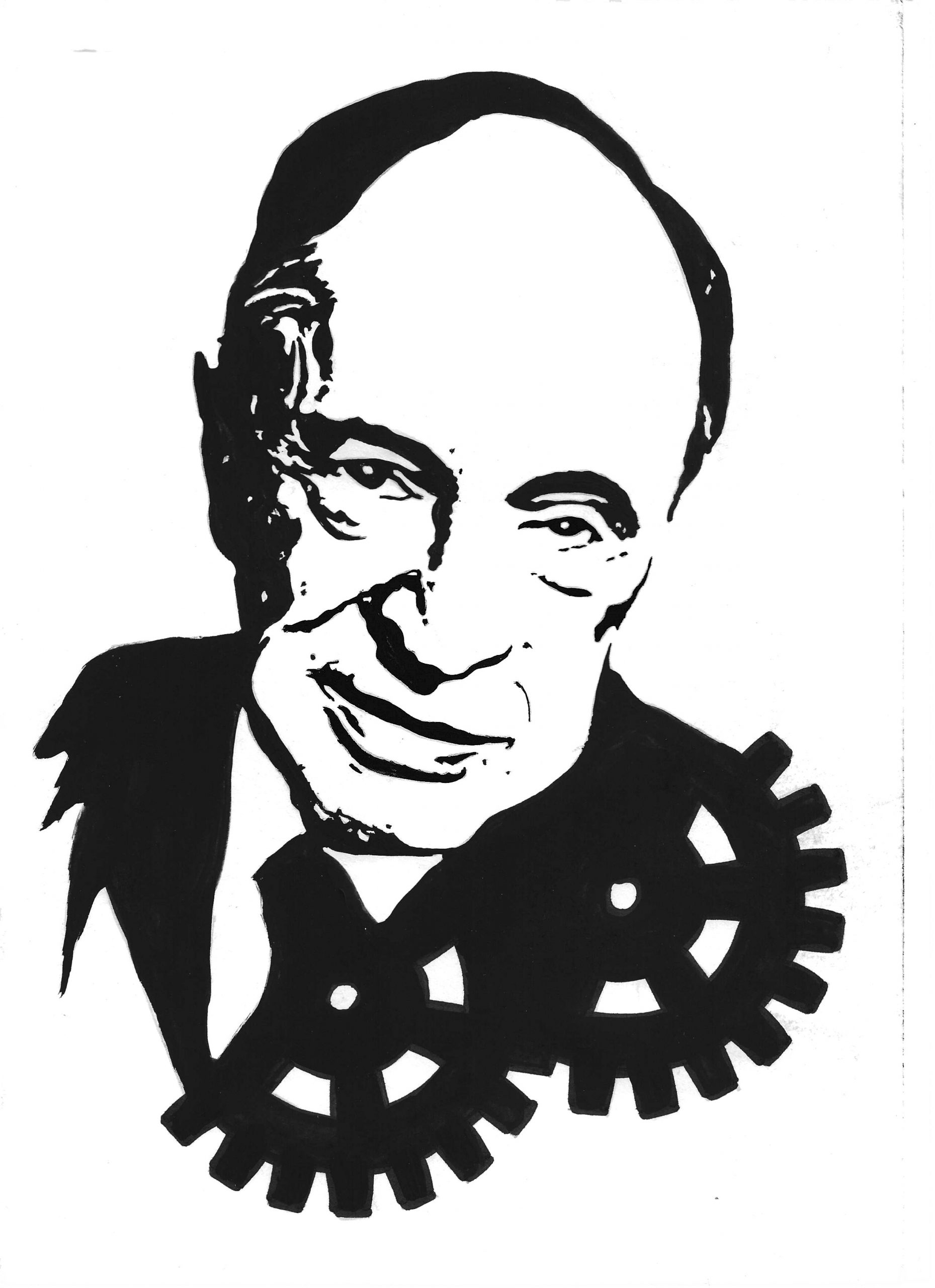
A dezvoltat o teorie termodinamică a fenomenelor de suprafață pe electrozii care adsorb atomii de hidrogen și oxigen și a formulat unul dintre conceptele fundamentale ale electrochimiei – conceptul de sarcină a electrodului. El a dezvoltat conceptul structurii stratului electric dublu la interfața metal-soluție și a stabilit o relație fundamentală între structura stratului electric dublu și viteza reacției electrochimice ( teoria descărcării lente), care a pus bazele unei noi secțiuni a electrochimiei teoretice moderne – cinetica proceselor electrodice.
Alexander Frumkin este un chimist fizic remarcabil al secolului XX, fondatorul școlii electrochimice.
Alexandru s-a născut pe 24 octombrie (12 octombrie, pe stil vechi) 1895, la Chișinău. Tatăl său, Naum Efimovici Frumkin (1857-1934), a fost agent de asigurări, iar mama sa, Margarita Lvovna Frumkina (1863-1949), a fost casnică. La scurt timp după nașterea lui Alexandru, tatăl său a mutat familia la Odessa. Alexandru și-a petrecut copilăria și adolescența într-un apartament mare și istoric de pe strada Preobrajenskaia. Abilitățile excepționale ale băiatului s-au manifestat foarte devreme. La vârsta de cinci ani, putea citi ca un adult. În clasele inferioare ale unei școli reale, rezolva deja probleme matematice complexe. Datorită cărții lui D.I. Mendeleev „Fundamentele chimiei”, a devenit interesat de chimie la vârsta de 11 ani și a început să lucreze într-un laborator la vârsta de 12 ani. Părinții săi erau foarte mândri de copilul lor minune. În timp ce erau în vacanță în străinătate, au rugat un chimist care locuia în apropiere să vorbească cu fiul lor. Un vecin l-a întrebat pe adolescent dacă știe ceva despre compușii iodoniului. Alexander i-a spus. Când „examenul” s-a terminat, a venit rândul tânărului chimist să fie surprins. El era „interogat” chiar de Konrad Willgerodt, chimistul organic german care descoperise chiar acei compuși.
În 1912, Alexander a absolvit Gimnaziul Sf. Paul din Odessa. Pentru a se califica pentru admiterea la universitate, Alexander a promovat un examen suplimentar la latină. Apoi a studiat timp de un an la Universitatea din Strasbourg, unde a lucrat distinsul fizician rus Leonid Isaakovich Mandelstam, care a avut o influență profundă asupra viitoarei cariere academice a lui Frumkin. La intrarea la Universitatea din Strasbourg, studentul din Odessa a rezolvat mai multe probleme complexe, permițându-i să sară peste un an. Nou-venitului i s-a acordat participarea gratuită și oportunitatea de a pregăti probe anorganice.
Primul Război Mondial a izbucnit. Alexander Frumkin s-a întors la Odessa cu ultimul tren. Ministrul liberal al Educației Publice i-a permis să susțină examenele externe pentru programul de studii de patru ani din cadrul Departamentului de Fizică și Matematică al Universității Novorossiisk. Timp de șase săptămâni, Alexander a promovat 24 de examene și a obținut note excelente la fiecare. Profesorii au apelat la administratorul districtual pentru a-l păstra pe copilul minune în cadrul departamentului, dar cererea lor a fost refuzată. Frumkin a început să lucreze ca asistent de laborator la un laminor de oțel, unde a dezvoltat un interes pentru electrochimie.
Prima sa lucrare publicată a fost un articol din 1917 despre mișcarea picăturilor de mercur sub influența curentului electric. Din 1917 până în 1920, a lucrat în laboratorul fizico-chimic al profesorului A.N. Sakhanov de la Universitatea Novorossiisk. În 1919, la Odessa, finanțat de tatăl său, a publicat prima sa lucrare majoră, care l-a consacrat printre cei mai importanți electrochimiști ruși. În această disertație nesusținută, Frumkin, în vârstă de douăzeci și patru de ani, lucrând în izolare științifică la Odessa, a introdus conceptul de sarcină zero ca proprietate fundamentală pentru electrochimia modernă.
În 1920, Frumkin a devenit profesor și a condus departamentul de chimie de la Institutul de Educație Publică (acum Universitatea Națională I.I. Mechnikov din Odessa) din Odessa. Originalul disertației de doctorat nesusținute a lui A.N. Frumkin se află la Muzeul Britanic de Electrochimie.
Omul de știință în vârstă de 24 de ani a trecut și prin schimbări în viața sa personală. Alexander Naumovich s-a căsătorit cu poeta din Odessa, Vera Inber , dar mariajul lor a fost de scurtă durată.
Din 1922 până în 1946, a lucrat la Institutul Fizico-Chimic L. Ia. Karpov din Moscova. În câțiva ani, Frumkin a devenit unul dintre principalii teoreticieni din domeniul electrochimiei de suprafață, iar în 1928–1929 a fost invitat să predea un curs de chimie coloizilor la Universitatea din Wisconsin, Madison, SUA.
În 1930, a devenit profesor în cadrul Departamentului de Chimie al Universității de Stat din Moscova și a condus Laboratorul de Electrochimie Tehnică din cadrul Departamentului de Chimie Fizică. În 1933, a fondat și a condus Departamentul de Electrochimie al Universității de Stat din Moscova M.G. Lomonosov, pe care l-a condus până la moarte. Din 1929, a ocupat simultan funcția de director adjunct, iar din 1939 până în 1949, cea de director al Institutului de Chimie Fizică al Academiei de Științe a URSS. În anii 1930, A.N. Frumkin a publicat o serie de lucrări fundamentale în domeniul electrochimiei moderne.
În timpul Marelui Război Patriotic, A.N. Frumkin, împreună cu Institutul Electrochimic Coloid pe care îl conducea, a fost evacuat la Kazan, unde a lucrat la chimia radiațiilor și aplicațiile sale militare. Din 1942 (anul înființării acestuia), a participat la lucrările Comitetului Evreiesc Antifascist, iar în 1944 a fost membru al prezidiului acestuia.
În 1949, în plină desfășurare a campaniei împotriva cosmopolitismului, A.N. Frumkin a fost acuzat că a subestimat rolul oamenilor de știință ruși în dezvoltarea chimiei fizice, a fost înlăturat din conducerea Institutului de Chimie Fizică și s-a stabilit într-un sat de țară de lângă Zvenigorod.
În 1952, a publicat monografia fundamentală „Cinetica proceselor cu electrozi”, primul manual în acest domeniu. În 1955, a semnat „Scrisoarea celor trei sute”. În 1958, a fondat și a condus Institutul de Electrochimie al Academiei de Științe a URSS, funcție pe care a deținut-o până la moarte.
În 1965, Frumkin a fondat revista „Electrochemistry” și a fost redactor-șef al acesteia. În același an, a fost ales președinte al Comitetului Internațional pentru Termodinamică și Cinetică Electrochimică.
Alexander Naumovich Frumkin este academician al Academiei de Științe a URSS în departamentul de științe matematice și naturale din 1932, membru străin a unsprezece academii de științe din țări străine, laureat al Premiului Lenin (1931) și a trei premii Stalin (1941, 1949, 1952), Erou al Muncii Socialiste (1965), laureat al medaliei de paladiu a Societății Electrochimice Americane, deținător a trei Ordine Lenin și două Ordine ale Drapelului Roșu al Muncii.
Din 1983, Institutul de Chimie Fizică și Electrochimie al Academiei Ruse de Științe este numit după A.N. Frumkin. În anul 2000, Societatea Internațională de Electrochimie a înființat Medalia Memorială Frumkin. Sub auspiciile Institutului de Electrochimie, se organizează Simpozionul Internațional Frumkin și Lecturile Frumkin de Electrochimie de la Universitatea de Stat din Moscova, precum și Premiul A.N. Frumkin pentru tinerii oameni de știință din domeniul electrochimiei teoretice și aplicate. Omul de știință a murit pe 27 mai 1976 la Tula și a fost înmormântat la Moscova.
(odessa-memory.info)
Alexander FRUMKIN – EN
He developed a thermodynamic theory of surface phenomena on electrodes that adsorb hydrogen and oxygen atoms and formulated one of the fundamental concepts of electrochemistry – the concept of electrode charge. He developed the concept of the structure of the electric double layer at the metal–solution interface and established a fundamental relationship between the structure of the electric double layer and the rate of the electrochemical reaction (the slow discharge theory), which laid the foundations of a new branch of modern theoretical electrochemistry – the kinetics of electrode processes.
Alexander Naumovich Frumkin is an outstanding physical chemist of the 20th century, the founder of the electrochemical school.
Alexander was born on October 24 (October 12, old style), 1895, in Chisinau. His father, Naum Efimovich Frumkin (1857-1934), was an insurance agent, and his mother, Margarita Lvovna Frumkina (1863-1949), was a housewife. Soon after Alexander’s birth, his father moved the family to Odessa. Alexander spent his childhood and adolescence in a large, historic apartment on Preobrazhenskaya Street. The boy’s exceptional abilities manifested themselves very early. At the age of five, he could read like an adult. In the lower grades of a real school, he was already solving complex mathematical problems. Thanks to D.I. Mendeleyev’s book „Fundamentals of Chemistry,” he became interested in chemistry at the age of 11, and began working in a laboratory at the age of 12. His parents were very proud of their child prodigy. While vacationing abroad, they asked a chemist who lived nearby to talk to their son. A neighbor asked the teenager if he knew anything about iodonium compounds. Alexander told him. When the „exam” was over, it was the young chemist’s turn to be surprised. He was being „interrogated” by Konrad Willgerodt himself, the German organic chemist who discovered those very compounds.
In 1912, Alexander graduated from St. Paul’s Gymnasium in Odessa. To qualify for university admission, Alexander passed an additional exam in Latin. He then went to study for a year at the University of Strasbourg, where the distinguished Russian physicist Leonid Isaakovich Mandelstam worked , who had a profound influence on Frumkin’s future academic career. Upon entering the University of Strasbourg, the Odessa student solved several complex problems, allowing him to skip a year. The newcomer was granted free attendance and the opportunity to prepare inorganic samples.
World War I broke out. Alexander Frumkin returned to Odessa on the last train. The liberal Minister of Public Education allowed him to take the external exams for the four-year course of study in the Physics and Mathematics Department of Novorossiysk University. Over six weeks, Alexander passed 24 exams and received excellent marks in each one. The professors appealed to the district trustee to retain the child prodigy in the department, but their request was refused. Frumkin went to work as a lab assistant at a steel rolling mill, where he developed an interest in electrochemistry.
His first published work was a 1917 article on the motion of mercury droplets under the influence of electric current. From 1917 to 1920, he worked in the physicochemical laboratory of Professor A.N. Sakhanov at Novorossiysk University. In 1919, in Odessa, funded by his father, he published his first major work, which established him among the leading Russian electrochemists. In this undefended dissertation, the twenty-four-year-old Frumkin, working in scientific isolation in Odessa, introduced the concept of zero charge as a property, fundamental to modern electrochemistry.
In 1920, Frumkin became a professor and headed the chemistry department at the Institute of Public Education (now the I.I. Mechnikov Odessa National University) in Odessa. The original of A.N. Frumkin’s undefended doctoral dissertation is housed in the British Museum of Electrochemistry.
The 24-year-old scientist also experienced changes in his personal life. Alexander Naumovich married the Odessa poet Vera Inber , but their marriage was short-lived.
From 1922 to 1946, he worked at the L. Ya. Karpov Physicochemical Institute in Moscow. Within a few years, Frumkin had become one of the leading theoreticians in the field of surface electrochemistry, and in 1928–1929, he was invited to teach a course on colloid chemistry at the University of Wisconsin in Madison, USA.
In 1930, he became a professor in the Chemistry Department of Moscow State University and headed the Laboratory of Technical Electrochemistry in the Department of Physical Chemistry. In 1933, he founded and headed the Department of Electrochemistry at M.G. Lomonosov Moscow State University, which he headed until his death. From 1929, he simultaneously served as deputy director, and from 1939 to 1949, director of the Institute of Physical Chemistry of the USSR Academy of Sciences. During the 1930s, A.N. Frumkin published a number of fundamental works in the field of modern electrochemistry.
During the Great Patriotic War, A.N. Frumkin, along with the Colloid Electrochemical Institute he headed, was evacuated to Kazan, where he worked on radiation chemistry and its military applications. From 1942 (the year it was founded), he participated in the work of the Jewish Anti-Fascist Committee, and in 1944, he was a member of its presidium.
In 1949, at the height of the campaign against cosmopolitanism, A.N. Frumkin was accused of underestimating the role of Russian scientists in the development of physical chemistry, removed from his leadership of the Institute of Physical Chemistry, and settled in a dacha village near Zvenigorod.
In 1952, he published the fundamental monograph „Kinetics of Electrode Processes,” the first textbook in this field. In 1955, he signed the „Letter of the Three Hundred.” In 1958, he founded and headed the Institute of Electrochemistry of the USSR Academy of Sciences, a position he held until his death.
In 1965, Frumkin founded the journal „Electrochemistry” and served as its editor. That same year, he was elected president of the International Committee on Electrochemical Thermodynamics and Kinetics.
Alexander Naumovich Frumkin is an academician of the USSR Academy of Sciences in the department of mathematical and natural sciences since 1932, a foreign member of eleven academies of sciences of foreign countries, a laureate of the Lenin Prize (1931) and three Stalin prizes (1941, 1949, 1952), a Hero of Socialist Labor (1965), a laureate of the palladium medal of the American Electrochemical Society, a holder of three Orders of Lenin and two Orders of the Red Banner of Labor.
Since 1983, the Institute of Physical Chemistry and Electrochemistry of the Russian Academy of Sciences has been named after A.N. Frumkin. In 2000, the International Society of Electrochemistry established the Frumkin Memorial Medal. Under the auspices of the Institute of Electrochemistry, the International Frumkin Symposium and the Frumkin Readings on Electrochemistry at Moscow State University are also held, as well as the A.N. Frumkin Prize for young scientists in the field of theoretical and applied electrochemistry.
The scientist died on May 27, 1976 in Tula and was buried in Moscow.
(odessa-memory.info)
Александр ФРУМКИН – RU
Он разработал термодинамическую теорию поверхностных явлений на электродах, адсорбирующих атомы водорода и кислорода, и сформулировал одно из фундаментальных понятий электрохимии – понятие заряда электрода. Он разработал концепцию структуры электрического двойного слоя на границе металл–раствор и установил фундаментальную связь между структурой электрического двойного слоя и скоростью электрохимической реакции (теория медленного разряда), что положило начало новому разделу современной теоретической электрохимии – кинетике электродных процессов.
Александр Наумович Фрумкин – выдающийся физико-химик ХХ века, создатель электрохимической школы.
Родился 24 (12 по ст. ст.) октября 1895 года в Кишиневе. Его отец, Наум Ефимович Фрумкин (1857-1934), служил страховым агентом, мать – Маргарита Львовна Фрумкина (1863-1949) – была домохозяйкой. Вскоре после рождения Александра его отец перевез семью в Одессу. В большой старинной квартире на улице Преображенской прошли детство и юность Александра. Выдающиеся способности у мальчика проявились очень рано. В пять лет он читал, как взрослый. В младших классах реального училища уже решал сложные математические задачи. Благодаря книге Д.И. Менделеева “Основы химии” в 11 лет увлекся химией, с 12-ти стал работать в лаборатории. Родители очень гордились сыном-вундеркиндом. Отдыхая как-то за границей, они попросили химика, жившего неподалеку, побеседовать с сыном. Сосед поинтересовался у подростка, знает ли он что-либо об иодониевых соединениях. Александр рассказал. Когда “экзамен” закончился, пришла очередь удивляться юному химику. Его “допрашивал” сам Конрад Вильгеродт, немецкий химик-органик, открывший те самые соединения.
В 1912 году Александр окончил одесскую гимназию Св. Павла. Александр, чтобы иметь право поступить в университет, сдал дополнительный экзамен по латыни. И на год уехал учиться в Страсбургский университет, где работал выдающийся физик из России Леонид Исаакович Мандельштам, оказавший огромное влияние на дальнейшую научную жизнь Фрумкина. При поступлении в Страсбургский университет студент из Одессы решил несколько сложных задач, и это позволило ему перескочить через курс. Новичку предоставили свободное посещение и возможность заниматься приготовлением неорганических препаратов.
Грянула Первая Мировая война. Александр Фрумкин последним поездом вернулся в Одессу. Либеральный министр народного просвещения разрешил ему сдать экзамены экстерном за 4-годичный курс физико-математического факультета Новороссийского университета. За шесть недель Александр выдержал 24 экзамена и по каждому получил “отлично”. Профессора обратились к попечителю округа с просьбой оставить студента-вундеркинда на кафедре, но получили отказ. Фрумкин пошел работать лаборантом на сталепрокатный завод, там и заинтересовался электрохимией.
Первой его опубликованной работой стала статья 1917 года о движении капель ртути под воздействием электрического тока. В 1917-1920 годах работал в физико-химической лаборатории профессора А.Н. Саханова в Новороссийском университете. В 1919 году в Одессе в книжной форме на средства отца опубликовал первую крупную работу, выдвинувшую его в ряды ведущих российских электрохимиков. В этой незащищенной диссертации двадцатичетырехлетний Фрумкин, работая в научной изоляции в Одессе, ввел фундаментальное для современной электрохимии понятие нулевого заряда как свойства.
В 1920 году Фрумкин стал профессором и возглавил кафедру химии Института народного образования (ныне – Одесский национальный университет имени И.И. Мечникова) в Одессе. Оригинал незащищенной докторской диссертации А.Н. Фрумкина хранится в Британском музее электрохимии.
У 24-летнего ученого произошли перемены и в личной жизни. Александр Наумович женился на поэтессе-одесситке Вере Инбер, но их брак оказался недолгим.
В 1922-1946 годах работал в Физико-химическом институте имени Л.Я. Карпова в Москве. Уже через несколько лет Фрумкин стал одним из крупнейших теоретиков в области поверхностной электрохимии и в 1928-1929 годах был приглашен для чтения курса лекций по коллоидной химии в университет штата Висконсин в Мэдисоне, США.
С 1930 года стал профессором химического факультета Московского государственного университета, руководил лабораторией технической электрохимии при кафедре физической химии. В 1933 году основал и возглавил кафедру электрохимии Московского государственного университета имени М.Г. Ломоносова, которой заведовал до конца жизни. Одновременно с 1929 года был заместителем директора, а в 1939-1949 годах директором Института физической химии АН СССР. На протяжении 1930-х годов А.Н. Фрумкин опубликовал ряд основополагающих работ в области современной электрохимии.
В годы Великой Отечественной войны А.Н. Фрумкин вместе с возглавляемым им Коллоидно-электрохимическим институтом находился в эвакуации в Казани, где работал в области радиационной химии и ее военных приложений. С 1942 года (с момента образования) участвовал в работе Еврейского антифашистского комитета, в 1944 году входил в состав его президиума.
В 1949 году в разгар кампании по борьбе с космополитизмом А.Н. Фрумкин был обвинен в недооценке роли русских ученых в развитии физической химии, отстранен от руководства Институтом физической химии и поселился в дачном поселке близ Звенигорода.
В 1952 году издал фундаментальную монографию “Кинетика электродных процессов” – первое учебное пособие в данной области. В 1955 году подписал “Письмо трехсот”. В 1958 году основал и возглавил Институт электрохимии АН СССР, руководил им до конца жизни.
В 1965 году Фрумкин основал журнал “Электрохимия” и был его редактором. В том же году избран президентом Международного комитета по электрохимической термодинамике и кинетике.
Александр Наумович Фрумкин академик АН СССР по отделению математических и естественных наук с 1932 года, иностранный член одиннадцати академий наук зарубежных стран, лауреат Ленинской премии (1931) и трех Сталинских премий (1941, 1949, 1952), Герой Социалистического Труда (1965), лауреат палладиевой медали Американского электрохимического общества, кавалер трех орденов Ленина, двух орденов Трудового Красного Знамени.
Институт физической химии и электрохимии Российской академии наук с 1983 года носит имя А.Н. Фрумкина. В 2000 году Международное общество электрохимии учредило “Мемориальную медаль Фрумкина”. Под эгидой Института электрохимии проводятся также международный Фрумкинский симпозиум, Фрумкинские чтения по электрохимии в МГУ, присуждается премия имени А.Н. Фрумкина для молодых ученых в области теоретической и прикладной электрохимии. Умер ученый 27 мая 1976 года в Туле, похоронен в Москве
(odessa-memory.info)