
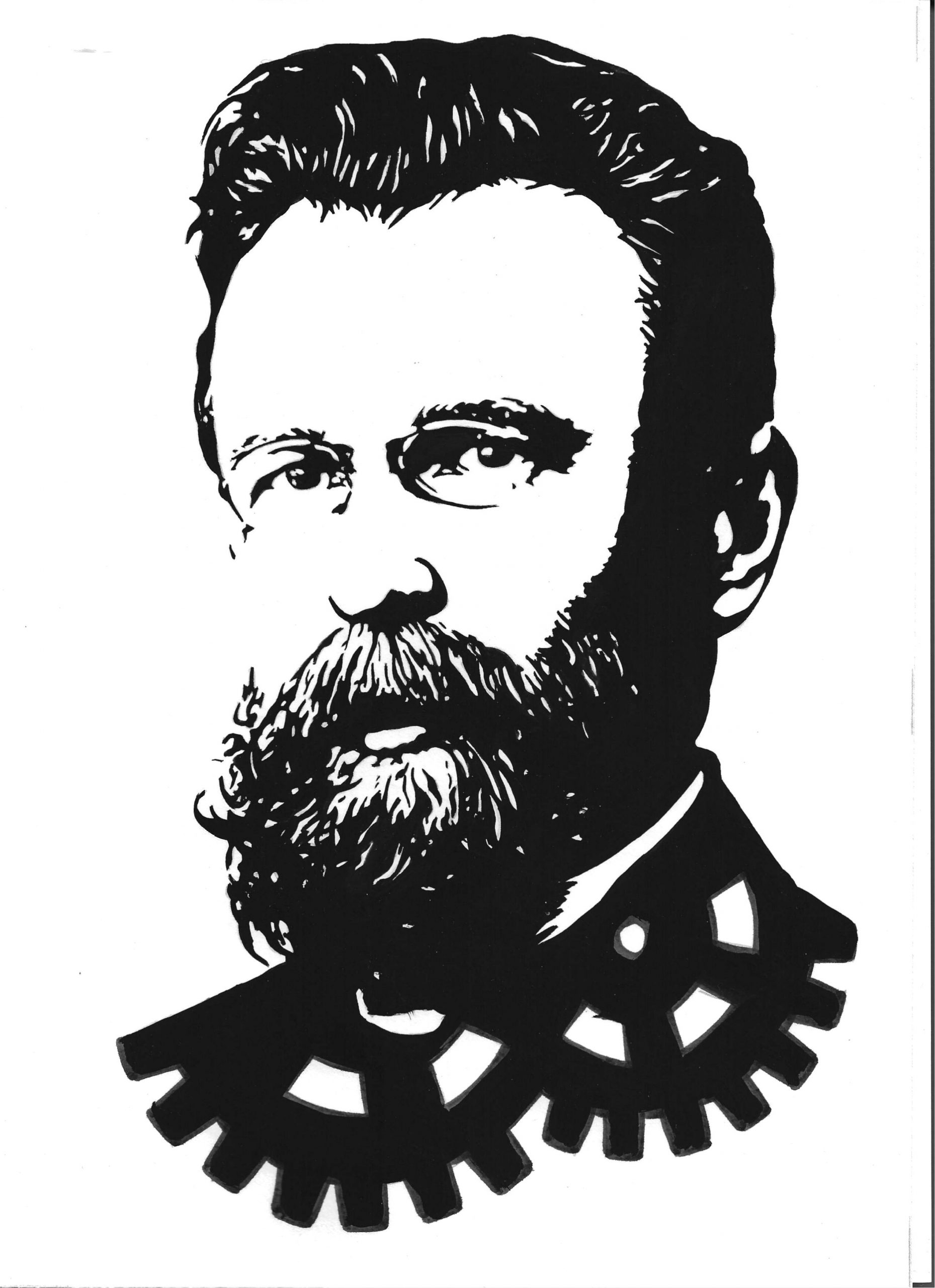
Inventatorul spumei pentru stingerea incendiilor și a primului extinctor cu spumă. El a creat această procedură, urmărind spuma de la bere, iar prima materie primă a fost apa sărată de mare. A testat la rafinăriile de petrol din Baku.
Alexandru Laurent s-a născut în 1849 la Chișinău. A absolvit liceul la Odessa și Institutul Politehnic din Sankt Petersburg, apoi și-a continuat studiile la Paris, unde a obținut o diplomă în inginerie chimică.
Întors în Rusia, A.G. Laurent a predat chimie timp de mulți ani la un gimnaziu din Baku, care la acea vreme era centrul industriei petroliere rusești în curs de dezvoltare.
Evoluțiile au fost adesea însoțite de incendii oribile. La acea vreme, petrolul era cel mai adesea depozitat în iazuri – instalații de depozitare a pământului sau pietrelor în aer liber – și transportat cu căruțe trase de cai. Situația a fost agravată de lipsa de experiență a departamentului de pompieri, care era format în principal din voluntari.
Frecvența incendiilor a crescut semnificativ odată cu extinderea producției și rafinării petrolului. După ce a fost martor la o serie de incendii devastatoare în câmpurile petroliere și a observat că apa nu stingea petrolul, Laurent a devenit interesat de proprietățile de stingere a incendiilor ale altor substanțe.
Există două versiuni despre cum chimistul a venit cu această idee. Conform uneia, Laurent observa încă un incendiu pe coasta Mării Caspice. Petrolul ajunsese la plajă și încă ardea, când dintr-o dată un val spumos s-a izbit de el, stingând instantaneu combustibilul vărsat. Conform unei alte versiuni, ideea spumei de stingere a incendiilor i-a venit lui Laurent într-o tavernă când s-a uitat la spuma de bere rămasă pe fundul cănii sale. Indiferent de situație, Laurent a decis să folosească spumă pentru a stinge incendiul.
- G. Laurent a dezvoltat o spumă specială pentru stingerea incendiilor, a cărei eficacitate a fost dovedită în teste efectuate în 1902–1903. Spuma, numită „Laurentine”, a fost creată din produșii de reacție ai unui acid și ai unei baze într-o soluție de săpun.
- G. Laurent a dezvoltat, de asemenea, o metodă de producere a spumei din pulbere, ceea ce a dus la apariția unor astfel de tipuri de echipamente de stingere a incendiilor, cum ar fi generatoarele de spumă și mixerele de spumă, iar spuma chimică a devenit predecesoarea spumei aeromecanice, utilizată pe scară largă în întreaga lume în stingerea incendiilor.
În total, au fost efectuate aproximativ 20 de teste cu spumă, inclusiv teste publice, în timpul cărora compoziția lui Laurent a fost turnată într-un rezervor care conținea ulei arzător. În câteva secunde, conform relatărilor martorilor oculari, suprafața lichidului inflamabil a fost acoperită cu spumă compactă, iar incendiul s-a stins. Uleiul nu a reușit să se aprindă din nou, deși mai multe rachete de semnalizare aprinse au fost aruncate în groapă.
În 1904, Laurent a prezentat rapoarte la ședințele Comitetului Tehnic al Societății Ruse de Pompieri și ale Diviziei Chimice a Societății Tehnice Ruse despre proprietățile de stingere a incendiilor ale spumei și metodele de producere a acesteia folosind extract de rădăcină de lemn dulce ca agent spumant. Cu toate acestea, inventatorul nu a reușit să convingă oficialii de necesitatea producției industriale de agenți de stingere a incendiilor extrem de eficienți.
După ce a primit un brevet în 1904 nu doar pentru spumă, ci și pentru stingător, Laurent, împreună cu R. L. Litchen, a organizat producția de stingătoare sub denumirea „Eureka” în propriul atelier din Sankt Petersburg. Inițial, acestea erau fabricate din tablă. Stingătoarele de masă aveau o capacitate de 1 litru, stingătoarele mici de perete aveau o capacitate de 3-6 litri, stingătoarele mari aveau o capacitate de 6 litri, iar stingătoarele fabricate în fabrică aveau o capacitate de 12 litri. Pentru pompieri, se produceau stingătoare de 12 litri cu furtun de evacuare de jumătate de metru, precum și stingătoare de 48 de litri cu furtun de 8 metri.
Cu toate acestea, producția de stingătoare nu a dat roade, așa că A.G. Laurent a deschis simultan un studio de fotografie la Sankt Petersburg, care în primii ani a adus venitul principal și a permis atelierului să funcționeze în pierdere.
În testele comparative efectuate în 1905, stingătorul Laurent a demonstrat o eficiență mai bună decât modelele străine existente.
Extinctoarele Eureka s-au dovedit extrem de eficiente și au fost la mare căutare – de exemplu, invenția lui Laurent a primit laude deosebite la Expoziția Internațională de Construcții și Artă de la Sankt Petersburg în 1908. Extinctoarele au fost expuse și la expoziții internaționale, unde au primit și ele laude deosebite.
După aceasta, atelierul nu a mai putut satisface cererea de stingătoare Eureka, iar Laurent a încercat să stabilească producția lor industrială. În 1907, Laurent a transferat fabricarea stingătoarelor în administrarea Societății Ruse de Stingere a Incendiilor pe Acțiuni, dar proiectul nu a depășit niciodată o serie de teste, așa că Alexander Georgievich a răscumpărat drepturile.
În 1909, A. G. Laurent a semnat un contract pentru producerea stingătorului „Eureka” cu industriașul privat Gustav Ivanovici List, care deținea o fabrică de mașini la Moscova. Cu toate acestea, după ce a îmbunătățit ușor designul stingătorului, antreprenorul a reușit să ocolească brevetul și a început să producă stingătorul „Eureka-Bogatyr”, după care a reziliat contractul cu Laurent.
După aceasta, în 1911, inventatorul a vândut brevetele pentru spumă și stingător companiei germane Salzkotten și, în cele din urmă, și-a închis afacerea. În acel moment, era un om foarte bogat. Nu se știe nimic despre soarta ulterioară a chimistului și inventatorului A. G. Laurent.
Alexander LAURENT – EN
Inventor of firefighting foam and of the first foam fire extinguisher. He created this method after observing the foam of beer, and the first raw material used was seawater. He tested the invention at the oil refineries in Baku.
Alexander Laurent was born in 1849 in Kishinev. He graduated from high school in Odessa and the St. Petersburg Polytechnic Institute, then continued his education in Paris, where he earned a degree in chemical engineering.
Returning to Russia, A.G. Laurent taught chemistry for many years at a gymnasium in Baku, which at that time was the center of the developing Russian oil industry.
The developments were often accompanied by horrific fires. At that time, oil was most often stored in ponds—earth or stone storage facilities in the open air—and transported by horse-drawn carts. The situation was exacerbated by the inexperience of the fire department, which consisted primarily of volunteers.
The frequency of fires increased significantly with the expansion of oil production and refining. Having witnessed a number of devastating oilfield fires and noticing that water didn’t extinguish the oil, Laurent became interested in the fire-extinguishing properties of other substances.
There are two versions of how the chemist came up with this idea. According to one, Laurent was observing yet another fire on the Caspian coast. The oil had reached the beach and was still burning, when suddenly a foaming wave crashed onto it, instantly extinguishing the spilled fuel. According to another version, the idea for firefighting foam came to Laurent in a tavern when he looked at the beer foam remaining at the bottom of his mug. Whatever the case, Laurent decided to use foam to extinguish the fire.
- G. Laurent developed a special fire extinguishing foam, the effectiveness of which was proven in tests conducted in 1902–1903. The foam, called „Laurentine,” was created from the reaction products of an acid and alkali in a soap solution.
- G. Laurent also developed a method for producing foam from powder, which led to the emergence of such types of fire-fighting equipment as foam generators and foam mixers, and chemical foam became the predecessor of air-mechanical foam, widely used throughout the world in firefighting.
In total, about 20 foam tests were conducted, including public ones, during which Laurent’s composition was poured into a tank containing burning oil. Within seconds, according to eyewitness reports, the surface of the flammable liquid was covered with compact foam and the fire subsided. The oil failed to ignite again, although several burning flares were dropped into the pit.
In 1904, Laurent presented reports at meetings of the Technical Committee of the Russian Fire Society and the Chemical Division of the Russian Technical Society on the fire-extinguishing properties of foam and methods for producing it using licorice root extract as a foaming agent. However, the inventor failed to convince officials of the need for industrial production of highly effective fire extinguishing agents.
Having received a patent in 1904 not only for the foam but also for the fire extinguisher, Laurent, together with R. L. Litchen, organized the production of fire extinguishers under the name „Eureka” in his own workshop in St. Petersburg. Initially, they were made of tin. Tabletop extinguishers had a capacity of 1 liter, small wall-mounted extinguishers had a capacity of 3-6 liters, large extinguishers had a capacity of 6 liters, and factory-made extinguishers had a capacity of 12 liters. For fire brigades, 12-liter extinguishers with a half-meter ejection hose were produced, as were 48-liter extinguishers with an 8-meter hose.
However, the production of fire extinguishers did not pay off, so A.G. Laurent simultaneously opened a photography studio in St. Petersburg, which in the first few years brought in the main income and allowed the workshop to operate at a loss.
In comparative tests conducted in 1905, Laurent’s fire extinguisher demonstrated better efficiency than existing foreign models.
The Eureka fire extinguishers proved highly effective and were in demand—for example, Laurent’s invention received high praise at the International Construction and Art Exhibition in St. Petersburg in 1908. The extinguishers were also displayed at international exhibitions, where they also received high praise.
After this, the workshop could no longer meet the demand for Eureka fire extinguishers, and Laurent attempted to establish their industrial production. In 1907, Laurent transferred the manufacture of fire extinguishers to the administration of the Russian Joint-Stock Fire-Fighting Company, but the project never progressed beyond a series of tests, so Alexander Georgievich repurchased the rights.
In 1909, A. G. Laurent signed a contract for the production of the „Eureka” fire extinguisher with private industrialist Gustav Ivanovich List, who owned a machine-building plant in Moscow. However, after slightly improving the extinguisher’s design, the entrepreneur was able to circumvent the patent and began producing the „Eureka-Bogatyr” fire extinguisher, after which he terminated the contract with Laurent.
After this, in 1911, the inventor sold the patents for the foam and fire extinguisher to the German company Salzkotten and finally closed his business. By this time, he was a very wealthy man. Nothing is known about the subsequent fate of the chemist and inventor A. G. Laurent.
Александр ЛОРАН – RU
Изобретатель пены для тушения пожаров и первого пенного огнетушителя. Он разработал этот метод, наблюдая пену пива, а первым исходным сырьём была морская солёная вода. Он испытал изобретение на нефтеперерабатывающих заводах в Баку.
Александр Георгиевич Лоран родился в 1849 году в Кишинёве. Александр окончил гимназию в Одессе и Санкт-Петербургский политехнический институт, а затем продолжил обучение в Париже, где получил диплом инженера-химика.
Вернувшись в Россию, А. Г. Лоран много лет преподавал химию в гимназии в Баку, где в то время находился центр развивающейся российской нефтяной промышленности.
Разработки часто сопровождали жуткие пожары. Тогда нефть чаще всего держали в прудах – земляных или каменных хранилищах под открытым небом, а перевозили на гужевых повозках. Усугубляла ситуацию неопытность пожарной охраны, состоявшей преимущественно из добровольцев.
Частота пожаров существенно возрастала с увеличением добычи нефти и её переработки. Будучи очевидцем ряда страшных пожаров на месторождении и заметив, что от воды нефть не гаснет, Лоран заинтересовался огнетушащей способностью других веществ.
Существуют две версии того, как эта идея пришла в голову химику. По одной из них, Лоран наблюдал за очередным пожаром на берегу Каспия. Нефть дотекла до самого пляжа и продолжала гореть, как вдруг на неё хлынула вспенившаяся волна и вмиг потушила растёкшееся топливо. По другой версии, идея о пене для тушения пожаров пришла Лорану в голову в трактире, когда он посмотрел на пивную пену, оставшуюся на дне кружки… Как бы то ни было, Лоран решил применить для тушения пожара пену.
А. Г. Лоран разработал специальную пену для тушения пожара, эффективность которой была проверена в ходе испытаний, проводившихся в 1902–1903 годах. Пена, названная «Лорантина», создавалась из продуктов взаимодействия кислоты со щёлочью в мыльном растворе.
А. Г. Лораном также разработал вариант получения пены из порошка, что предопределило появление таких видов пожарного оборудования, как пеногенераторы, пеносмесители, а химическая пена стала предшественницей воздушно-механической пены, широко используемой во всём мире в борьбе с пожарами.
В общей сложности было проведено около 20 испытаний пены, в том числе и публичных, в ходе которых в резервуар с горящей нефтью заливался состав Лорана. Через несколько секунд, как писали в отчетах очевидцы, поверхность горючей жидкости оказывалась накрытой компактной пеной и пожар утихал. Вновь поджечь нефть не удалось, хотя в яму было сброшено несколько горящих факелов.
В 1904 году Лоран выступил на заседаниях технического комитета Российского пожарного общества и химического отделения Русского технического общества с докладами об огнетушащих свойствах пены и способах её получения за счёт использования в качестве пенообразующего вещества экстракта солодкового корня (лакрицы). Однако изобретателю не удалось убедить чиновников в необходимости промышленного производства высокоэффективных средств тушения пожаров.
Получив в 1904 году патент не только на пену, но и на огнетушитель, Лоран совместно с Р. Л. Литхеном организовал в собственной мастерской в Санкт-Петербурге выпуск огнетушителей под названием «Эврика». Первоначально их изготовляли из жести. Настольные огнетушители имели ёмкость 1 литр, настенные малые – 3–6 литров, большие – 6 литров, а заводские – 12 литров. Для пожарных команд выпускались огнетушители ёмкостью 12 литров, имевшие выкидной полуметровый рукав, и 48 литров с длиной рукава 8 метров.
Однако производство огнетушителей не окупалось, поэтому А. Г. Лоран одновременно открыл фотоателье в Санкт-Петербурге, которое первые годы приносило основной доход и позволяло мастерской работать в убыток.
При сравнительных испытаниях, проведённых в 1905 году, огнетушитель Лорана показал лучшую эффективность по сравнению с существовавшими зарубежными образцами.
Огнетушители «Эврика» показали высокую эффективность и пользовались спросом – например, на Международной строительно-художественной выставке в Санкт-Петербурге в 1908 году изобретение Лорана получило высокую оценку. Огнетушители демонстрировались и на международных выставках, где также получали высокие оценки.
После этого мастерская уже не могла удовлетворить спрос на огнетушители «Эврика», и Лоран попытался наладить их промышленное производство. В 1907 году Лоран передал изготовление огнетушителей администрации завода Русского акционерного противопожарного общества, но дальше проведения ряда испытаний дело не пошло, поэтому Александр Георгиевич выкупил право обратно.
В 1909 году А. Г. Лоран заключил договор на производство огнетушителя «Эврика» с частным промышленником Густавом Ивановичем Листом, владевшим в Москве машиностроительным заводом. Однако, немного усовершенствовав конструкцию огнетушителя, предприниматель смог обойти патент и стал выпускать огнетушитель «Эврика-Богатырь», после чего расторг договор с Лораном.
После этого в 1911 году изобретатель продал патенты на пену и огнетушитель немецкой фирме «Зальцкоттен» и окончательно закрыл своё дело. К этому времени он был очень состоятельным человеком. О дальнейшей судьбе химика-изобретателя А. Г. Лорана ничего не известно.